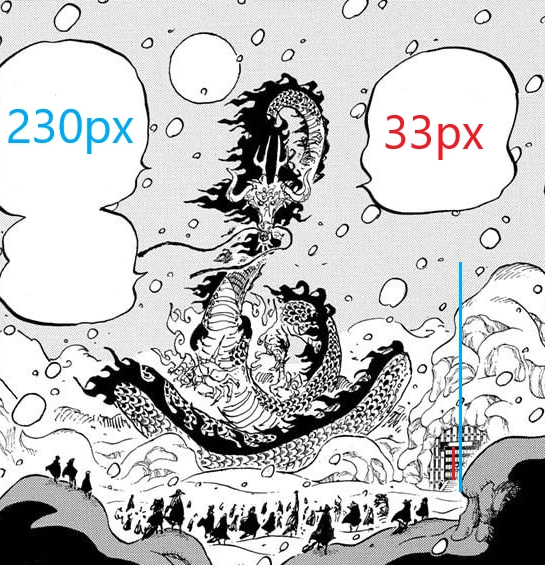
A couple of seconds is also a short timeframe.
Which is impossible unless you ignore context. It's the midst of heavy combat, why on earth for any logical reasons would these characters simply sit there and wait for several seconds? The context here indicates that the timeframe was nigh instantly, with Kaido needing a warning, and only escaped because Zoro missed. Zoro's Dragon-Blaze travelled that distance from the moment it was deployed, all in a single panel without any character intervention.
I'm not aware of this "general practice to use KE for feats that only happen in a single panel".
Quite literally dozens, upon dozens of calcs work under this basis. It's even in one of the main calculations pages.
Calculation Introduction and References.
2. In order to determine time frame, look to the media itself. If the feat is in video format, you can easily determine exactly how long it takes for the feat to be completed. For videos, determining what Frames per second the video runs at and counting the frames can be an extremely accurate way to dictate time. The tool
Watchframebyframe can help with this process. Looking at the timestamp from feat start to feat end can be acceptable as well for longer feats. If the media is not video based, see if there is any indication of a time. Does a character speak of how long it took? If so use this.
If not and there is no other way to determine speed, you will need to assume a time frame. If it was a very quick feat, assume 1 second. If it was longer, 1 minute to upwards to 10 minutes can work. Go with whatever makes the most sense in the context of the feat. Once you have this time, convert.
It's literally written down. The feat happened quickly, in a single panel therefore we can assume a timeframe, especially with all the other evidence, context here suggests a quick time frame.