
- 11,945
- 10,852
We would love a good laugh or 2 while the real crt drops. Go for it.yes
im just going to drop the CRT if no one says anything...
Follow along with the video below to see how to install our site as a web app on your home screen.
Note: This feature may not be available in some browsers.
We would love a good laugh or 2 while the real crt drops. Go for it.yes
im just going to drop the CRT if no one says anything...
Castorice Vs Gokucastorice chan...


That Half-Elf Witch of Envy has nothing on Goku, he solos allCastorice Vs Goku
I’ll whoop him unequalize speedThat Half-Elf Witch of Envy has nothing on Goku, he solos all

 vsbattles.fandom.com
Lies Goku's true Speed is higherI’ll whoop him unequalize speed
Castorice
Castorice is a playable character in Honkai: Star Rail. The land that reveres death, Aidonia, where snow falls endlessly, has today drifted into a sweet slumber. Castorice, daughter of the River of Souls, Chrysos Heir in search of "Death" Coreflame, sets forth. You must guard the lament of souls...

What about the Dead Zone, the Teleportation Zone, and the Suguroku Space? Aren't they universe-sized as well since they have their own space-time continuums?Limbo isn't a real place. Limbo isn't even referenced by the Daizenshuu. When you are killed by a demon, your soul simply drifts through 3D space.
What ability would the Nyoibo even get for, apparently, linking the dimensions of Earth and the Heavenly Realm through Korin Tower?
 dragonball.fandom.com
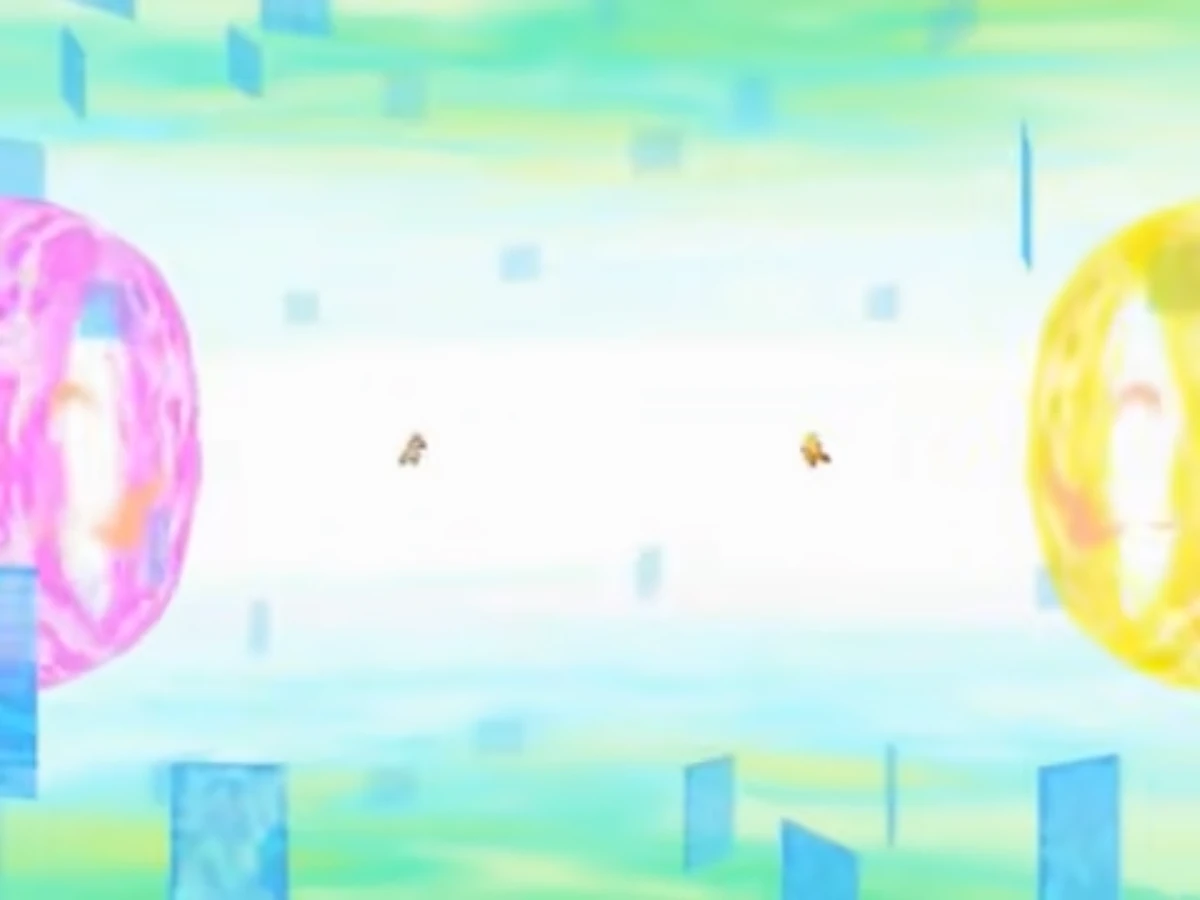 dragonball.fandom.com
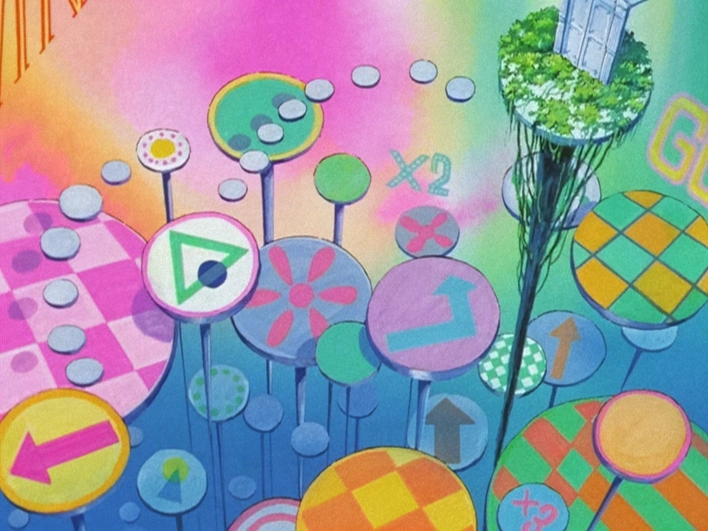 dragonball.fandom.com

snip
What is the Dimension of Swirling Lights?
In Dragon Ball Super: Broly, the clash between Gogeta and Broly broke reality and forced the pair into a Dimension of Strange Swirling Lights.
This setting was described in the Broly Anime Comic as super-dimensional several different times. The kanji used here refers to higher dimensional spaces (spaces with extra dimensional axes).
What's the deal with that one interview regarding the Dimension of Swirling Lights?
The production team for the Broly movie was interviewed on the film's special effects under an article from the official Dragon Ball Website. Here, it was declared that the team's purpose was to create super-dimensional images with CGI technology.
It was stated that under the process of CGI, you'd normally use a reference image of a setting like the wilderness or sea to produce 3-dimensional imagery. This time however, they would model a space based on nothing that exists in real life as if it were a different dimension. The kanji used for "different dimension" in the article was 異空間, which directly means "different space" and seems to refer to an outside space with different laws. One of the main interpretations of [異空間] refers to higher dimensional spaces, though we can't make conclusions from that alone.
Later on however, they said that to portray this space in a 3-D format, they expressed different dimensions using mathematical formulas as a model. Different dimension(s) [異次元] in the context of science and sci-fi refers to worlds with dimensions distinct/different from the usual; an idea that encompasses both a fantasy concept of alternate worlds and mathematical concepts of dimensions to denote a world that occupies a higher dimension.
Saying that CGI images are 'based on math' means nothing on its own since the whole process of animation uses linear algebra, calculus, physics, et cetera. The difference with this situation is that this space wasn't based on mathematics necessarily, it was mathematics. They said that rather than modeling with a 3-dimensional shape exposed to color/size adjustment settings, they used nothing but purely calculated mathematical formulas as models in and of themselves to generate these dimensions which are equivalent to a mathematical expression that human viewers couldn't comprehend.
I've also looked into the concept of "super-dimensional imagery" slightly. This old computer science research article mentions such an idea under the context of representing 3-dimensional ground features effectively under the format of 2-dimensional imaging space. This other article mentions the concept under the context of super-dimensional reconstruction, which is where they would reconstruct the 3-D structure of a stationary porous material (things like paper, cardboard, sponges, etc.) from a 2-dimensional reference image. It seems the idea of "super-dimensional imagery" consistently indicates representing something beyond the dimensional boundaries of imaging software in question, and of course, the team's goal was to represent super-dimensional imagery under 3-D imaging space. We don't need to think too hard, this is where occam's razor comes in handy.
I feel like people form the wrong conclusions from the article, so let's refer back to these 4 scans I posted above in particular. Our takeaways are very simple.
It all circles back to the central question: "what was different about this space that warranted its status as super-dimensional imagery?" Super-dimensional means higher dimensional space, super-dimensional imagery means imagery meant to depict something higher dimensional than its imaging space, and the team said multiple times that what made this space different from most CGI images is that it could not be constructed through standard 3-dimensional modeling and required an additional, intermediate process altogether.
- Standard modeling is explicitly a 3-dimensional process.
- They couldn't create this 3-dimensional image using said process.
- Instead, they used a different modeling technique involving mathematics that were used to create an incomprehensible space.
- Their result was a super-dimensional image.
Let's bring it all together now. They stated the Dimension of Swirling Lights couldn't be constructed with standard 3-D modeling, so they had to generate its environment by expressing the dimension(s) as mathematical formulas that you wouldn't expect humans to comprehend. This loaded statement seems to carry heavy connotations as far as higher mathematical dimensions go. For instance, with tesseracts (which represent higher dimensional space), their volume is based on mathematical formulas, humans can't generally comprehend such expressions, and modeling them visually is considered the equivalent of modeling abstruse mathematics in the third dimension. Not to mention, the first research link I provided explained "super-dimensional imagery" as something 3-dimensional portrayed in 2-dimensional imaging space while the second one explained "super-dimensional reconstruction" as creating 3-dimensional structures from 2-dimensional reference images: thus our takeaway is that the dimensions from the Broly movie were higher dimensional spaces that the movie production staff aimed to portray in the third dimension using CGI.
Where is the Dimension of Swirling Lights located?
It was stated that this dimension was reached by distorting space-time, breaching the limits of the universe, tearing dimensional walls apart, then "disintegrating" the dimension to leave it. Their power was stated to be too much for the universe to handle. In Dragon Ball, "the universe" refers to the living world more often than the macrocosm as a whole. It would definitely make more sense if the Dimension of Swirling Lights encompassed the living world [or at bare minimum, is an adjacent space-time] since breaking the living world's space-time fabric leads directly to it and back from it. Therefore, if the Dimension of Swirling Lights were a higher dimensional space, it would be most reasonable to say it directly transcends the living world as opposed to the macrocosm, neutral zone, timeline, etc.
Where would this scale to?
General relativity describes space-time as a self-contained model of reality consisting of 3 spatial dimensions and 1 temporal dimension. However, since we know the Dimension of Swirling Lights was intended to be a higher dimensional space beyond the living world, this would make the macrocosm consist of at least 4 dimensions of space and 1 dimension of time: making universe 7 likely 5-D. - @ProfectusInfinity

The Dead Zone is a void. The Teleportation Zone and Sugoroku Space are areas of Subspace, which exists between dimensions and outside of space and time.What about the Dead Zone, the Teleportation Zone, and the Suguroku Space? Aren't they universe-sized as well since they have their own space-time continuums?
Dead Zone (void)
This article is about the void. For the technique, see Dead Zone (technique). For the Dragon Ball Z film under the same name, see Dragon Ball Z: Dead Zone. The Dead Zone (デッドゾーン, Deddo Zōn) is a superspace[1] void of darkness created by Garlic. The Dead Zone appears as a large, fanged skull-like...Teleportation Zone
The Teleportation Zone (瞬間移動空間, Shunkan Idō Kūkan) is a location accessed whenever someone utilizes Instant Transmission.[1] It is primarily featured in the film series of Dragon Ball Z. The Teleportation Zone varies in appearance each time it is shown, but they all feature a unique environment...Sugoroku Space
Sugoroku Space (スゴロク空間, Sūgorokūkan) is an area between dimensions in Universe 7. This world where people are sent when they are sucked into a wormhole or otherwise slip between dimensions. The caretakers of the place host a board game to see if the person has the desire to live. If the game is...


I am only certain of one thing: the amount of heat generated by ki would be extremely high, and characters would be atomized every time.Some time ago, I remember seeing someone saying that it would be possible to increase a character’s resistance to heat manipulation or even their own heat manipulation by using ki explosions, since ki generates heat or something like that.
Which might actually make sense — there are scenes, for example, where characters look like they’ve been burned after taking a Ki attack, or are shown emitting smoke. There are even simpler examples, like Gohan generating fire with his ki.
In those classic scenes where a character is completely evaporated (like Cell’s death, for instance), something has to be causing that, and I believe it’s probably the heat from the attack.
Do you guys have any thoughts on this? Would it be possible to calculate the temperature based on the environmental destruction caused by ki?

Some time ago, I remember seeing someone saying that it would be possible to increase a character’s resistance to heat manipulation or even their own heat manipulation by using ki explosions, since ki generates heat or something like that.
Which might actually make sense — there are scenes, for example, where characters look like they’ve been burned after taking a Ki attack, or are shown emitting smoke. There are even simpler examples, like Gohan generating fire with his ki.
In those classic scenes where a character is completely evaporated (like Cell’s death, for instance), something has to be causing that, and I believe it’s probably the heat from the attack.
Do you guys have any thoughts on this? Would it be possible to calculate the temperature based on the environmental destruction caused by ki
another practical example, 0:30 onwards
Although it is a scene of relaxation, Gohan evaporated the bone in his attempt to produce heat
when Freeza is destroyed by Trunks, the same smoke pattern is visible again, showing that it was the heat of the energy that evaporated it (Also, in Daizenchuu 2 chapter 190-193, it is said that he was reduced to atoms by Trunks)
Furthermore, when Beerus uses that technique similar to a "star" on Goku, the old Kaioshin says that it would evaporate anything that came close, which could include Katchin, which is the strongest metal in Universe 7.




Exactly and it doesn't help that the manga has been hiatus for well over a year now (excluding that one-shot in February) and Daima concluded in the Winter. Not much to talk about when the future of the franchise is all over the place and I highly doubt peeps wanna entertain doomposting.Because there's nothing to talk about.
You can't really force people to speak.

are of could possibly be used as "from" but idk Japanese soNo, Piccolo and Kami are of one spirit and one body. They were once a single being—the Nameless Namekian.

We're so back...
Worse still, i hate this nonsense of drawing something like that and not saying anything useful. It's definitely going to be another DLC or Xeno verse 3 (which might be good for some), but i hope there will be a new anime as a sequel to Super and a new movie (for example, an ending for Daima or something like that).I'm always wary of these "big announcements"
last time it was a toyotaro drawing, not that I want to lower your expectations

We're so back...
Being a fan is like being a rubber band of emotions.I'm always wary of these "big announcements"
last time it was a toyotaro drawing, not that I want to lower your expectations
I'm waiting for it to be announced that it's actually Dragon Ball GT Season 2 with a Dragon Ball GT S1 Remake, where they then make my job 1000x times easier and give GT SSJ4 that fancy Shintani Animation and/or the Daima Look.Being a fan is like being a rubber band of emotions.

To be fair it was niceI'm always wary of these "big announcements"
last time it was a toyotaro drawing, not that I want to lower your expectations
To be fair it was nice
What if Bulma was Goku's mother and he was born on Beerus' planet?What if this time Toyotaro draws a picture of ssj5 AF Goku and makes a comment about "Try to get good at drawing these types of forms again"
What if a DB Evolution novelization sequel to the movie was announced, written by Toyotaro? OVOWhat if Bulma was Goku's mother and he was born on Beerus' planet?


