- 62
- 12
From A Friend Who Can't Post CRT
I will therefore debunk Supernova’s refutation regarding Yog-Sothoth, specifically the claim that Yog, being supposedly subject to pantheism, would be fragmented and therefore ineligible for Tier 0 due to possessing plurality rather than absolute simplicity. I will establish the distinction between manifestation and substance, between relative perception and ontology itself, in order to clarify why this refutation fundamentally rests upon conceptual confusion.
It is true that Yog is described as being “all.” However, this is not merely a simplistic form of pantheism in which God is strictly equivalent to the totality of manifestations. What is presented in the narrative aligns far more closely with panentheism: Yog remains transcendent to every manifestation of its own substance. There is therefore both an immanent and a transcendent domain simultaneously. All reality is a manifestation of Yog’s substance; thus, Yog = reality, but reality ≠ Yog. Manifested reality is merely an expression of the absolute and eternal substance, while the being itself is in no way reduced or limited by those manifestations.
Now that this has been clarified, it becomes easy to refute the first premise: the claim that Yog is limited by space-time. No, it is not. Even within pantheism, asserting that the Absolute is “limited” by its manifestations is incorrect. Limitation applies only to local manifestations, not to the absolute divine substance itself. Spatio-temporal structures depend upon the substance, but the substance is not reducible to those structures. This becomes even more obvious under a panentheistic framework: God both contains reality and transcends it. Therefore, claiming that Yog is limited by space-time amounts to confusing the phenomenal domain with the ontological one.
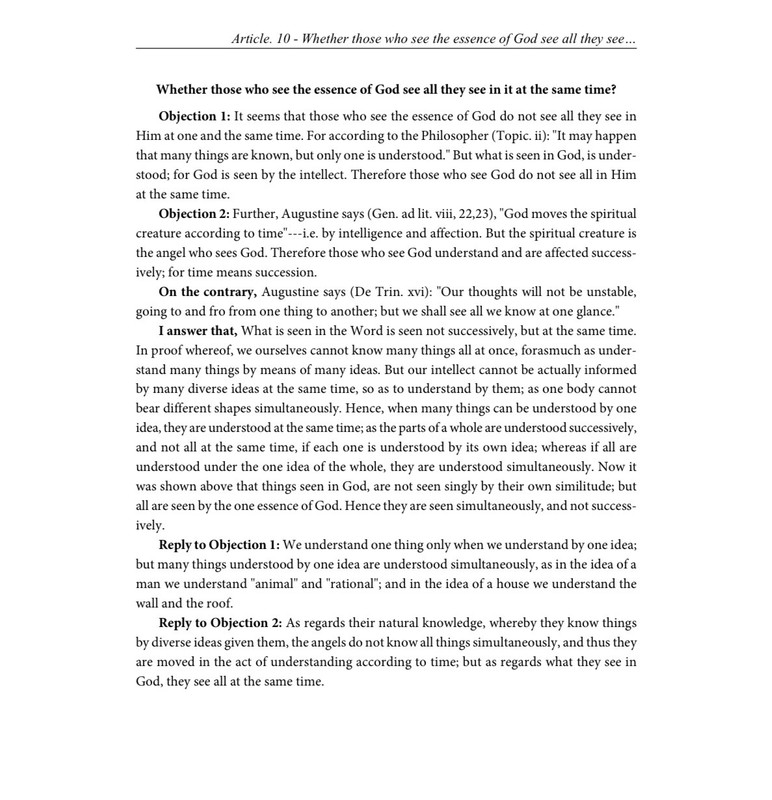
As for the second thesis — the notion of “fragments” — this too must be clarified carefully. The fact that a limited manifestation perceives the totality in fragmented form does not imply that the totality itself — the eternal substance — is genuinely fragmented. To use a classical parallel, within Christianity God may be distinguished as the Father, the Son, and the Holy Spirit without this implying any substantive division within the divine essence itself. Such distinctions operate only at the level of manifestation and limited perception, not at the level of the Absolute Being.
Likewise, in Yog-Sothoth’s case, fragmentation belongs exclusively to the domain of manifestations and is therefore local and relative. You are taking a relative perception tied to limited manifestations and treating it as an intrinsic ontological property of Yog itself, which is not valid. Furthermore, every moment in the text where “fragments” are referenced concerns Carter — who is himself merely a manifestation. A manifestation may possess fragments of itself without the intrinsic substance from which it emanates being fragmented. One must distinguish between internal perceptual limitation and the external ontological status of the absolute substance.
The text itself supports this interpretation through expressions such as “angle of consciousness,” “local aspect,” and “partial views.” These explicitly indicate that fragmentation belongs to the relatively perceptible plane. Relative plurality therefore does not demonstrate substantial plurality.
Furthermore, the notion of “parts” is not ontologically disqualifying here; it functions merely as metaphorical language. These are not “parts of the substance,” but rather perspectival manifestations of a higher reality that fundamentally remains indivisible. For example, if you observe an immense circle far beyond the limits of your perception, you may mentally divide it into several sections without the circle itself becoming ontologically multiple.
Likewise, complexity does not imply multiplicity. A subject may progressively perceive the absolute substance more clearly without the substance itself becoming differentiated. This merely reflects a local increase in comprehension, further emphasizing Yog’s ineffability. An increase in perceptual complexity therefore signifies only a deeper apprehension of the Absolute, a gradual contemplation, or the reduction of the cognitive limitations of the subject — in this case, Carter.
In conclusion, Yog-Sothoth remains fully eligible for Tier 0. The refutation ultimately relies upon repeated confusions between relativity and ontology, manifestation and substance, extrinsic plurality and intrinsic plurality, as well as immanence and ontological limitation. None of this demonstrates that Yog is genuinely composed of fragments or ontologically limited in any meaningful sense.
I will therefore debunk Supernova’s refutation regarding Yog-Sothoth, specifically the claim that Yog, being supposedly subject to pantheism, would be fragmented and therefore ineligible for Tier 0 due to possessing plurality rather than absolute simplicity. I will establish the distinction between manifestation and substance, between relative perception and ontology itself, in order to clarify why this refutation fundamentally rests upon conceptual confusion.
It is true that Yog is described as being “all.” However, this is not merely a simplistic form of pantheism in which God is strictly equivalent to the totality of manifestations. What is presented in the narrative aligns far more closely with panentheism: Yog remains transcendent to every manifestation of its own substance. There is therefore both an immanent and a transcendent domain simultaneously. All reality is a manifestation of Yog’s substance; thus, Yog = reality, but reality ≠ Yog. Manifested reality is merely an expression of the absolute and eternal substance, while the being itself is in no way reduced or limited by those manifestations.
Now that this has been clarified, it becomes easy to refute the first premise: the claim that Yog is limited by space-time. No, it is not. Even within pantheism, asserting that the Absolute is “limited” by its manifestations is incorrect. Limitation applies only to local manifestations, not to the absolute divine substance itself. Spatio-temporal structures depend upon the substance, but the substance is not reducible to those structures. This becomes even more obvious under a panentheistic framework: God both contains reality and transcends it. Therefore, claiming that Yog is limited by space-time amounts to confusing the phenomenal domain with the ontological one.
As for the second thesis — the notion of “fragments” — this too must be clarified carefully. The fact that a limited manifestation perceives the totality in fragmented form does not imply that the totality itself — the eternal substance — is genuinely fragmented. To use a classical parallel, within Christianity God may be distinguished as the Father, the Son, and the Holy Spirit without this implying any substantive division within the divine essence itself. Such distinctions operate only at the level of manifestation and limited perception, not at the level of the Absolute Being.
Likewise, in Yog-Sothoth’s case, fragmentation belongs exclusively to the domain of manifestations and is therefore local and relative. You are taking a relative perception tied to limited manifestations and treating it as an intrinsic ontological property of Yog itself, which is not valid. Furthermore, every moment in the text where “fragments” are referenced concerns Carter — who is himself merely a manifestation. A manifestation may possess fragments of itself without the intrinsic substance from which it emanates being fragmented. One must distinguish between internal perceptual limitation and the external ontological status of the absolute substance.
The text itself supports this interpretation through expressions such as “angle of consciousness,” “local aspect,” and “partial views.” These explicitly indicate that fragmentation belongs to the relatively perceptible plane. Relative plurality therefore does not demonstrate substantial plurality.
Furthermore, the notion of “parts” is not ontologically disqualifying here; it functions merely as metaphorical language. These are not “parts of the substance,” but rather perspectival manifestations of a higher reality that fundamentally remains indivisible. For example, if you observe an immense circle far beyond the limits of your perception, you may mentally divide it into several sections without the circle itself becoming ontologically multiple.
Likewise, complexity does not imply multiplicity. A subject may progressively perceive the absolute substance more clearly without the substance itself becoming differentiated. This merely reflects a local increase in comprehension, further emphasizing Yog’s ineffability. An increase in perceptual complexity therefore signifies only a deeper apprehension of the Absolute, a gradual contemplation, or the reduction of the cognitive limitations of the subject — in this case, Carter.
In conclusion, Yog-Sothoth remains fully eligible for Tier 0. The refutation ultimately relies upon repeated confusions between relativity and ontology, manifestation and substance, extrinsic plurality and intrinsic plurality, as well as immanence and ontological limitation. None of this demonstrates that Yog is genuinely composed of fragments or ontologically limited in any meaningful sense.