- 6,001
- 2,780
I had a question about how the LS advantage works and in what cases it allows one to gain the upper hand over a stronger opponent, and in what cases it doesn't.
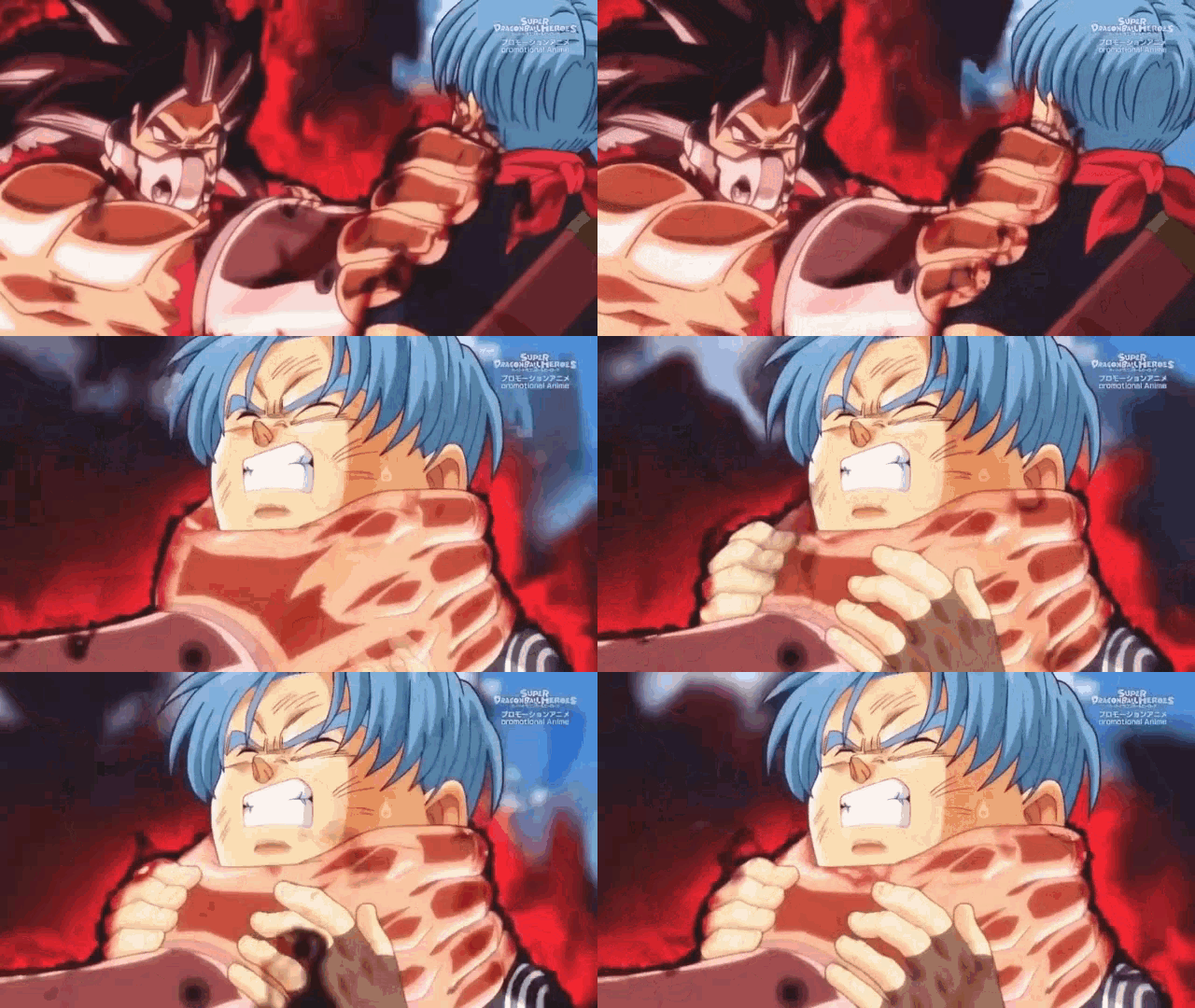
LS usually determined whether one character could immobilize another. However, I recently learned that a 10-Kilton character with LS Class M can tear apart a 15-Kilton character with LS Class 5 due to physical superiority, despite equal durability.
In this battle between Superman and Homelander, one of Clark's wincons was LS Class G versus Homelander's LS Class K. This is despite Homelander's durability being five times higher than Superman's.
@Dalesean027 even noted that LS Class G would be enough to tear apart a 7-C character.
So, what's the upper limit for when LS actually provides such an advantage? If character A has 8-A strength and LS Class G, and character B has High 7-C durability and LS Class K, can character A kill the other with LS?
Does LS really allow them to tear apart an opponent with the same AP and Dura?
LS usually determined whether one character could immobilize another. However, I recently learned that a 10-Kilton character with LS Class M can tear apart a 15-Kilton character with LS Class 5 due to physical superiority, despite equal durability.
In this battle between Superman and Homelander, one of Clark's wincons was LS Class G versus Homelander's LS Class K. This is despite Homelander's durability being five times higher than Superman's.
@Dalesean027 even noted that LS Class G would be enough to tear apart a 7-C character.
So, what's the upper limit for when LS actually provides such an advantage? If character A has 8-A strength and LS Class G, and character B has High 7-C durability and LS Class K, can character A kill the other with LS?
Does LS really allow them to tear apart an opponent with the same AP and Dura?





 ?
?