
- 1,007
- 317
It's relevant as its one of the strongest structures in the real worldOkay, so what is the relevance of it, if not as something for characters to be inside?
Follow along with the video below to see how to install our site as a web app on your home screen.
Note: This feature may not be available in some browsers.
It's relevant as its one of the strongest structures in the real worldOkay, so what is the relevance of it, if not as something for characters to be inside?


There's stronger real world phenomena (i.e. the big bang, black hole mergers, this).It's relevant as its one of the strongest structures in the real world

I'm not sure what this has to do with the moon being boring/normal, or what that would have to do with this discussion as a whole.
The rules specifically say and are meant to safeguard against mundane location profiles that's why I brought up if Moon is boring or unique to most people. If it's said that there is no baseline for nonmundane profiles for even locations most would know and find to be unique, then so be it. No Moon profilesThe issue is I don't think there is a good one. And that attempting to find one will have it continually being kicked back month after month to allow more and more profiles.
What rules are you talking about? The closest I can find is this from our Editing Rules:The rules specifically say and are meant to safeguard against mundane location profiles that's why I brought up if Moon is boring or unique to most people. If it's said that there is no baseline for nonmundane profiles for even locations most would know and find to be unique, then so be it. No Moon profiles
Which still says nothing like that.The only exception to these rules is Real Life, which serves as more of a reference for feats and common weapons, armors, events, and animals, rather than being an actual verse.
- Please do not make profiles for real life vehicles, unless the vehicle in question is combat-oriented, such as a tank. Ordinary civilian vehicles are not notable or distinct enough for pages.
These rules on the location profiles page.What rules are you talking about? The closest I can find is this from our Editing Rules:
Which still says nothing like that.

 vsbattles.fandom.com

Agnaa is probably going to question how this tackles the problem of most locations being mundane, and the arugment on its own seems redundant with the existance of the passive effects sectionI think we may have to propose a new "wiki standard" page for location (This should be a staff thread), the goal of it, should be discussing first if it's a good idea or not, then the exact description.
(I do think more or less the entire "Power and abilities" section should go, and instead be replaced with "Climate", this will allow them to have much more fun and unique fight setups.
We could list such things as gravity, light, atmosphere, weather etc.
My first proposal is also to limit it to celestial bodies, more specifically, physical planets and moons.
Mood, I wish we could tag, but to be fair it'd also open up chances for trolls and other malicious users to wreak havoc on the notifs of many, many people.aw man. And what do u think about the lion mane jellyfish profile?
1: Hello, interesting seeing you here (I thought you'd be more concentrated on FCOC, particularly given your "strongest on FCOC" thread).
Phoenix A
Phoenix A is among largest black holes currently discovered. Phoenix a has an estimated mass of 100 billion suns. The black hole was initially discovered in 2010 AC by R. Williamson and his colleagues during a survey by the South Pole telescope in Antarctica along with it's hypermassive, Abell...
As a black hole fanboy, I have a couple of things to say about this:
- Black holes are not non-existent. Nonexistence on this wiki means that they quite literally do not have any physical or spatial-temporal existence. Black holes explicitly do. If they were really non-existent voids, we wouldn't be able to observe them whatsoever.
- Black holes don't manipulate the void nor can they convert things into void. The law of conservation of mass physically limits information from being created or destroyed.
- Intangibility should be used in place of incorporeality. Since black holes aren't abstract things. They're just intangible, spatial constructs.
- The durability should be unknown, as black holes can't be physically interacted with. And they'd just passively absorb any energy source near them anyway. It's also not really possible to destroy the singularity from what we know, given it is a zero-dimensional point in space.
- The matter manipulation/deconstruction should be down to the informational level. Information in physics being things like entropy and quantum states defining the most elementary components of reality. Would be either quantum or macro-quantum level matter manipulation and deconstruction.
- You could add heat manipulation given that the accretion disks around large black holes can be millions of degrees.
- Could add Longevity since the largest black holes are predicted to survive for over a googol years.
- Could add a weakness to Hawking Radiation, since that's the only known thing capable of naturally dissolving them.



 blog.nuclearsecrecy.com
 thebulletin.org


And then there's condensing Real World categories/sections with a frickton of individual entries like Firearms (look at the messages/posts that the linked message/post replies to so that you could understand what the thread more or less came down to, though it's probably advised to also read all messages/posts that came after that linked message/post):I'm not sure what you're referring to.
It is the point.
We were talking about the distinction between locations and objects. Whether the example I use has the extraordinary abilities needed to be an actual profile is irrelevant, since we're not talking about that.
- Me: Black holes are generally large enough to be locations.
- You: They can't be locations because people can't visit them.
- Me: People can't visit many fictional locations that would be valid for profiles.
- You: If someone created a black hole in a lab, that would be an object, not a location.
- Me: Only because it would be too small to be a location, just as how a patch of dirt is too small to be a location, but a mountain isn't.
- You: Mountains don't have extraordinary abilities.
I don't want to be peppered with people looking for exceptions every couple of months....
Especially since I worry that, at one point, we would stop applying proper scrutiny to this. Particularly with our prior attempts at providing Editing Rules for The Real World not strictly being followed....
- We have to include the other planets within our solar system, right? They're mostly quite different, and are quite notable for us.
- We should include a few of the more prominent moons in our solar system, they actually have some quite stunning properties.
- We should include this exoplanet, it's the most Earthlike one we've found to date!
- Shouldn't we include the supermassive black hole in the center of the Milky Way? That's the one most relevant to us.
- Why don't we include the Milky Way as a whole for matches between ginormous beings?
- This black hole's quite interesting, it spins more quickly than any others we've detected!
- This exoplanet has a different composition than any in our solar system, it should deserve a spot, right?
- Ooh here's an interesting exoplanet; it's not part of any star system! We should surely have at least one page for one of those.
Yet we have the Bloodhound LSR, Ford Crown Victoria Police Interceptor, Prosthesis, Robosaurus, and Megasaurus. They're not ordinary civilian vehicles (although the Ford Crown Victoria is very close), but they're also not combat-oriented. And if we are ditching the combat requirement, then we'd be open to profiles for shit like this.


ME!Who wants me to reveal my findings on how we can scale durability in the real world?
I don't really understand where you are going with this relative to scaling durability, since soft and more bendable "materials/organisms" can take blunt forces extremely well while they are weak to sharp attacks, while hard and non-bendable materials/organisms have the opposite properties.What do you guys think?
Then what is the composition in the immediate targeted area a composition of more? That's why we factor in the skull with hitting or crushing the head.I don't really understand where you are going with this relative to scaling durability, since soft and more bendable "materials/organisms" can take blunt forces extremely well while they are weak to sharp attacks, while hard and non-bendable materials/organisms have the opposite properties.
Another thing to keep in mind is that a lot of them are mixed, such as humans. Our skin is Soft and therefore resistant towards blunt attacks, but is weak against sharp things, such as Swords or the old' classic papercuts. While our bones are resistant to sharp stuff, while weak against blunt force.
So while I agree with the points you are making, I don't really know what you are trying to say you want the new scaling to be, or even how we are supposed to do it?
Everyone should let me know how consistent this is.
Sources:
- https://www.britannica.com/science/damping
- https://www.sciencedaily.com/releases/2016/08/160808151939.htm#:~:text=Summary:,transmit%20energy%20through%20soft%20materials.
- https://www.physicsclassroom.com/mmedia/momentum/cthoi.html#:~:text=The%20total%20kinetic%20energy%20before,sound%20energy%20and%20thermal%20energy.
TL;DR: In short, softer materials halt and absorb energy. Harder materials do the opposite; they're unable to halt and absorb a significant amount of kinetic energy from a receiving object (thus, causing an effect where the force/energy since it has nowhere to go, a lot or most of it comes back to the receiving object if it can't damage the target object greatly). Linear momentum could be used in cases where the target object isn't at least near-immovable.
Long answer:
After reading Armorchompy's CRT on the bottlenose dolphin, he agreed with Keeweed to downgrade the animal on the basis that the dolphin hitting the shark isn't equal to running head-first into an immovable wall. That got me thinking on where this logic and this reply came from. So I decided to look into the mechanics of where kinetic energy if it hits an object.
Kinetic energy generally is absorbed in especially soft objects due to the concept of damping; the halting of vibrating motion (energy indirectly included). In reference to solid objects, hysteresis damping is when some of the energy involved in restoring or deforming an object dissipates in a solid as vibrations or transfers as kinetic energy within the liquid.
But what if you're hitting an object that regardless of hard or softness isn't a near-immovable object (like a ball)?
- This means if you were to punch a pillow-based wall, the energy would be absorbed into the wall as heat or vibrations due to it's high damping potential.
- I thought then, what about hard objects? The opposite would be true; the energy wouldn't be absorbed too much and there would be 2 possibilities. With enough force, the target object could break or deform, or since energy has nowhere else to go, it goes back to the receiving object
What do you guys think?
- If the targeted area is soft, I suspect you should calculate the velocity of the target object within the system of both objects' linear momentum, then the kinetic energy of the target object should be used unless if the Tiering System can't handle stuff around 10-B to baseline 9-C.
- If the targeted area is hard, then I suspect you extract the velocity of the receiving object within the system using the velocity from the system's linear momentum
In addition to what Dark and you mentioned, H3:I don't really understand where you are going with this relative to scaling durability, since soft and more bendable "materials/organisms" can take blunt forces extremely well while they are weak to sharp attacks, while hard and non-bendable materials/organisms have the opposite properties.
Another thing to keep in mind is that a lot of them are mixed, such as humans. Our skin is Soft and therefore resistant towards blunt attacks, but is weak against sharp things, such as Swords or the old' classic papercuts. While our bones are resistant to sharp stuff, while weak against blunt force.
So while I agree with the points you are making, I don't really know what you are trying to say you want the new scaling to be, or even how we are supposed to do it?


If the objects are able to move freely then you need to consider whether it's an inelastic or elastic collision.What do you guys think?
Wait, that got me thinking, if a big piece of metal only be dented by a katana and the katana itself only has a dent, and that counts as durability, then where do we draw the line in the sand when it comes to material durability against damage/force if only getting a minor cut from a blunt attack counts, a big animal would shrug off knife wounds like a guy only getting a cut from a punch to the face, and enough piercing damage taking off significant amounts of material from the animal, and the animal functioning perfectly fine for hours to days at a time?
From the perspective of the Wiki, durability is just a measure of whether or not they can do damage to something.Wait, that got me thinking, if a big piece of metal only be dented by a katana and the katana itself only has a dent, and that counts as durability, then where do we draw the line in the sand when it comes to material durability against damage/force if only getting a minor cut from a blunt attack counts, a big animal would shrug off knife wounds like a guy only getting a cut from a punch to the face, and enough piercing damage taking off significant amounts of material from the animal, and the animal functioning perfectly fine for hours to days at a time?
Like nothing but a dent would count, but how large of a cut until it's no longer durability really? This is a relevant topic for damage durability
Or generally worsen the structural stability/integrity of whatever you're trying to damage to the point where it measurably is less functional/capable of functioning properly (if we're trying to extrapolate/apply said idea of "meaningful damage" to various different types of entities that are being damaged/that other entities are trying to damage). (I'm not sure what term I can use for both inanimate non-living stuff and animate living stuff (or anything that exists in general) other than, well, stuff, things, entities or beings... welp.)Obviously in real life whether or not you do meaningful damage depends entirely on if you can sever something important and/or if you can inflict enough pain and blood loss.
Yeah, the terminology will always be vague just due to the sheer difference of various things. Like, a rock doesn't really have a function to begin with which can be disrupted, but it does have a structure which can be disrupted. At what point that becomes "meaningful" will always be subjective.Or generally worsen the structural stability/integrity of whatever you're trying to damage to the point where it measurably is less functional/capable of functioning properly (if we're trying to extrapolate/apply said idea of "meaningful damage" to various different types of entities that are being damaged/that other entities are trying to damage). (I'm not sure what term I can use for both inanimate non-living stuff and animate living stuff (or anything that exists in general) other than, well, stuff, things, entities or beings... welp.)
I left an answer in the thread.^Maybe peeps can help answer this query from this person, I'm asking on their behalf here since no one's replied to them yet and the topic could be brought up here instead so more peeps can aid them
I wouldn't be opposed to that.Speaking of which, perhaps these could be considered for addition as references for the Composite Human.
Thanks.I left an answer in the thread.
I wouldn't be opposed to that.
They didn't ban ALL the human stuff, they just didn't have enough agreement on what the average human should be.guys quick question
So why did they ban the human stuff all together? Why not just change the composite human to average human?
 vsbattles.fandom.com
 vsbattles.fandom.com
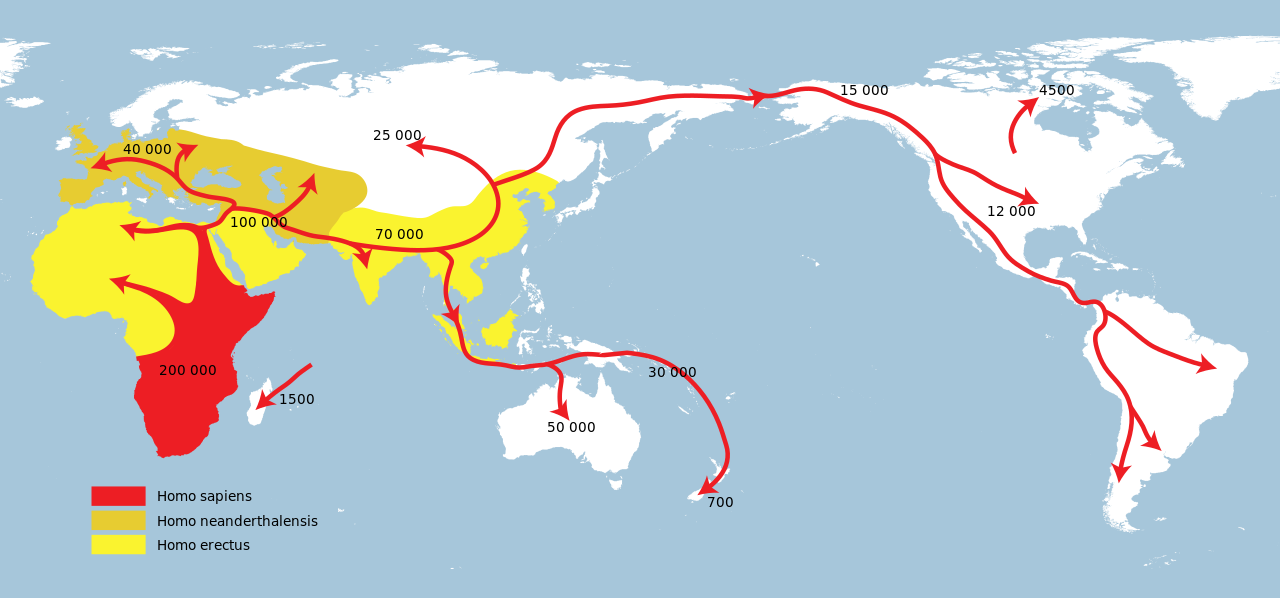
We probably should also update the Human Race page to stay up to date with modern sources on stuff like how long Homo Sapiens has actually existed, the size of the human population and the quantity of weapons and whatnot.They didn't ban ALL the human stuff, they just didn't have enough agreement on what the average human should be.
Also there's these:
The Real World
Real Life/The Real World/Reality. It is where we all live. Real Life is the conjectured state of things as they actually exist, rather than as they may appear or might be imagined. In a wider definition, reality includes everything that is and has been, whether it is observable or...The Human Race (The Real World)
The Human Race is a civilization composed of 195 separate nations and countries, all residing on Earth. Anatomically modern humans have been around for about 200,000 years, but civilization was only founded roughly 6,000 years ago. Tier: At least 7-B Civilization Type: Post-Industrial...
vsbattles.fandom.com
vsbattles.fandom.com


 vsbattles.fandom.com
vsbattles.fandom.com
vsbattles.fandom.com
vsbattles.fandom.com
vsbattles.fandom.com


 www.forbes.com
At work right now but I'll show you the relevant links later but basically there is a rule this allowing real world of people and there's a thread on why he composite human is practically booted out of the wiki since 2018 staff will elaborate more on this if they beat me to it.guys quick question
So why did they ban the human stuff all together? Why not just change the composite human to average human?
Composites in this context take the high end of a specific group and combine it into one thing. The average person is your healthy city dweller and internet user (most people you met at this point)Plus, there is a difference between composite human and average human


So, apparently we gave orangutans less credit than they deserve:
So, apparently we gave orangutans less credit than they deserve:
In addition to the fact they're (in the case of the largest species, the Bornean orangutan) the third largest ape and (in general for orangutans) 4 or 5 to 7 times as strong as a human (chimps are only 1.35 times as strong as a human)...Well, that's concerning.

 www.ifaw.org

 www.ultimatekilimanjaro.com

 www.explorationjunkie.com
 vsbattles.fandom.com
Probably easier to discuss this later today when more peeps are active, but I'd assume a few matters at hand are adding new entries to the verse and ensuring that the page sections and categories aren't overcrowded.For the record, I agree with Agnaa's points above about real world locations.
What do we currently need to evaluate here?


