• This forum is strictly intended to be used by members of the VS Battles wiki. Please only register if you have an autoconfirmed account there, as otherwise your registration will be rejected. If you have already registered once, do not do so again, and contact Antvasima if you encounter any problems.

    For instructions regarding the exact procedure to sign up to this forum, please click here.
  • We need Patreon donations for this forum to have all of its running costs financially secured.

    Community members who help us out will receive badges that give them several different benefits, including the removal of all advertisements in this forum, but donations from non-members are also extremely appreciated.

    Please click here for further information, or here to directly visit our Patreon donations page.
  • Please click here for information about a large petition to help children in need.

About the Speed of Electricity

Messages
2,627
Reaction score
1,173
We are currently taking the value we use for the speed of electricity from this calculation.
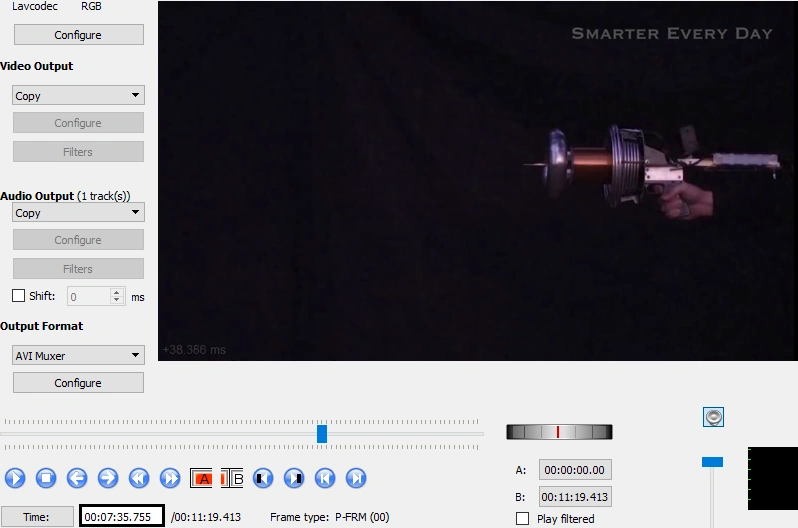

In 2023, a user did another calculation using the same source as well as other sources, and DontTalkDT rejected this new calculation and stated that it was decided not to use the old calculation.

I searched the forum a bit, but I couldn't find the staff thread where it was decided not to use it.

Also, in the calculations below, calculations using the value calculated in the old calculation were approved by many different CGMs both before and after DontTalkDT's comment.


So what I mean is that we need to officially decide on the Speed of Electricity and add it to our calculation page.
 
Last edited:
Something something not possible because electricity in general has much looser qualifications than lightning feats because it depends on voltage (higher the voltage, faster the speed) but who knows.
 
Something something not possible because electricity in general has much looser qualifications than lightning feats because it depends on voltage (higher the voltage, faster the speed) but who knows.
A possible solution to this might be to just use the maximum range of any given electric spark as a proxy for its speed.

Since the speed of the stepped leader of an electric spark in air correlates to the voltage, and a minimum voltage is required to meet the breakdown threshold of air to support any ionized channel - typically about 30kV/cm at sea level.

So if someone can gather enough tests of electric spark speeds vs voltage, we could plot a model of speed vs voltage. Then for any given feat the maximum range of the electric spark would be measured from which we could get the minimum voltage needed to support the spark, which could then be put into the model to get the minimum speed.
 
Determining a speed for electricity in general isnt possible yeah. Im not really knowledgeable on electricity but I wonder if it would be possible to determine the minimum speed for electricity that showcases a certain property? Like being able to hurt people for example.
 
Determining a speed for electricity in general isnt possible yeah. Im not really knowledgeable on electricity but I wonder if it would be possible to determine the minimum speed for electricity that showcases a certain property? Like being able to hurt people for example.
Unfortunately how much electricity hurts someone is dependent on too many variables (voltage, current, timeframe, frequency, etc.) to really get a single minimum speed out of it.

A possibility is getting the minimum speed from the range it demonstrates as I elaborate above.
 
It seems like electricity can get arbitrarily slow, and measuring it in this sort of way...
Determining a speed for electricity in general isnt possible yeah. Im not really knowledgeable on electricity but I wonder if it would be possible to determine the minimum speed for electricity that showcases a certain property? Like being able to hurt people for example.
Doesn't work for this reason
Unfortunately how much electricity hurts someone is dependent on too many variables (voltage, current, timeframe, frequency, etc.) to really get a single minimum speed out of it.
But I'm not sure whether Epyriel's distance suggestion works. It sounds plausible, but idk enough.
 
So, the CGMs who have commented so far, and DontTalk, believe that these calculations should not be used as the general speed of electricity. At least, that's the impression I get.

So, in total, four CGMs are against using this calculation as the overall speed of electricity. I think this is sufficient to invalidate these calculations for other feats/calcs.
 
I believe there never was a thread rejecting Lina's calc, because the calc was never officially approved for use to begin with.

Can't really say whether Epyriel's idea has any merit or if there are further variables involved either. Nor how to proceed from that point if it had.
 
I believe there never was a thread rejecting Lina's calc, because the calc was never officially approved for use to begin with.
To be fair, we often don't have threads to Officially Approve things for use, or add them to standards pages. There's a fair few niche methods that just get accepted once, and then that's referenced for later usages.
 
To be fair, we often don't have threads to Officially Approve things for use, or add them to standards pages. There's a fair few niche methods that just get accepted once, and then that's referenced for later usages.
Not official approved things don't establish a binding precedent either, though.

In any case, in my opinion is not how that is supposed to work to begin with. If you wish to establish a fundamentally new constant for use general use (as opposed to, say, a new destruction value using the same method as for other materials), then it should be documented.

These stealth standards are chaotic and unhealthy, because they can be accepted and one place, rejected in another, nobody really has an overview on what they all are, there are conflicting ones, there are no proper standards for when to use them etc.
These things also basically result in rules and regulations being decided by a single calc group member vote.
 
For now, they are practically binding precedent. To the extent that one calc group member vote can't overrule it and get every calc that used it overturned. They're already integrated into the scaling, and all that.

Maybe we are long enough into the site's lifespan where we can start solidifying things like that.

I do feel the need to point out that the precise thing we lose is the ability to consider unique methods for unique feats without needing to maintain a database, or create a calc group thread beforehand.

...Actually, at this point, I don't think that's really enough of a time-saver to justify it.
 
For now, they are practically binding precedent. To the extent that one calc group member vote can't overrule it and get every calc that used it overturned. They're already integrated into the scaling, and all that.

Maybe we are long enough into the site's lifespan where we can start solidifying things like that.

I do feel the need to point out that the precise thing we lose is the ability to consider unique methods for unique feats without needing to maintain a database, or create a calc group thread beforehand.

...Actually, at this point, I don't think that's really enough of a time-saver to justify it.
No, as it stands they can be overturned just as easily as they are approved. There is no protection mechanism in place. Which sucks for the ones who used that, as they might have to redo their scaling, but that's why it should have been officially discussed.
Worst of all, you can absolutely deny it in one calc and not in another, which is one of the stupid problems with such stealth standards. There is nothing in place that could inform anyone of anything that changes.

And I believe there is common sense difference between unique methods for unique feats and things which obviously set a general purpose precedent, like the speed of electricity.
(Edit: Although I will tell you that for your feat, maintaining a structure underwater can't be calced in terms of work. I hope your feat in question is actually for expanding the bubble, not maintaining it, else it works in a direction that has been rejected several times in the past.... maybe we need a list of rejected methods as well)
 
Last edited:
No, as it stands they can be overturned just as easily as they are approved. There is no protection mechanism in place. Which sucks for the ones who used that, as they might have to redo their scaling, but that's why it should have been officially discussed.
Worst of all, you can absolutely deny it in one calc and not in another, which is one of the stupid problems with such stealth standards. There is nothing in place that could inform anyone of anything that changes.

And I believe there is common sense difference between unique methods for unique feats and things which obviously set a general purpose precedent, like the speed of electricity.
Fair.
(Edit: Although I will tell you that for your feat, maintaining a structure underwater can't be calced in terms of work. I hope your feat in question is actually for expanding the bubble, not maintaining it, else it works in a direction that has been rejected several times in the past.... maybe we need a list of rejected methods as well)
It was created before diving and then maintained at least 2000 meters deep. Oops!

This is really starting to sound like a good project.
 
Last edited:
I don't recall personally specifcally speaking in regards to the speed of electricity as it travels in air but yeah we definitely need to come to some sort of decision and get an official standard put in place for this so this can finally be settled, can't really say more since im at work rn but I'll be following here
 
I'm of the opinion that a speed rating for this kind of thing is necessary. There's just too many electricity-based feats out there and most of the time it's legitimately portrayed as something fast - hell I'd argue it's one of the things that is most universally understood by authors as something that goes fast. Banning all such calculations because the speed cannot be accurately determined sounds like a mistake to me- if only because it will encourage a lot more people to try and scale random feats to MHS+ which we CGMs can all agree is obnoxious already.

EDIT: There is a much bigger issue - we have dozens or hundreds of calcs and ratings based on electric feats. Can you imagine removing all of them and needing to find new ratings? Doesn't seem feasible.

So I strongly suggest that a good standard is found. It can be and probably should be a lowball, but even if it's not fully accurate 100% of the time it's just smart to have a number that we can default to and say "you can use this to calc feats relating to electricity", maybe with some qualifiers like "this can harm people".
 
Unfortunately how much electricity hurts someone is dependent on too many variables (voltage, current, timeframe, frequency, etc.) to really get a single minimum speed out of it.

A possibility is getting the minimum speed from the range it demonstrates as I elaborate above.
Electric Precure eating.
 
Personally? I don't think there is a good number/velocity here.

Electricity isn't like a bullet being fired from a gun. However, that's just a personal opinion. I know we always make exceptions like this.

I don't have a solution for this.
 
Techincally, what we are speaking about is the electric spark, not electricity itself. Electricity is the movement of electrons which is invisible while the electric spark is the visual electric discharge - which is the case in most of these attacks. Specifically, we are looking at a streamer discharge which usually moves 10^5 m/s in atmosphere. So, we can start there.
 
Techincally, what we are speaking about is the electric spark, not electricity itself. Electricity is the movement of electrons which is invisible while the electric spark is the visual electric discharge - which is the case in most of these attacks. Specifically, we are looking at a streamer discharge which usually moves 10^5 m/s in atmosphere. So, we can start there.
Adding other measurements does not address the important issue of how much these measurements vary.
 
Bump.
Since staff didn't yet reach consensus, may I ask what should normal members do? Should we continue to use electricity speed from above for calcs for now, or we should get rid off it in all calcs and ratings?
 
same, unless a better option that is more surefire works its best to just keeps things as they are for now
 
We absolutely shouldn't just keep using an illegitimate method. Either we find a method we know actually works accurately and properly approve it or it's just not a calculable feat for the time being. We can't just slap a random speed value on things for the sole purpose of having a speed value.
 
Leaving my two cents here.

Electric sparks differ immensely from each other IRL in vide variety of their characteristics(origins, voltage, atmospheric conditions during their formation). But most of the electric sparks we are actually interested in have quite a good share of similar characteristics:

- Most of time they are targeted at something, instead of just dispersing near their origin(as they do in current calc used for electricity speed).

- They usually cross distances in order of 1 meter or more, which requires certain voltage

- They are formed under mostly normal atmospheric conditions (air density, temperature, pressure, humidity and such).


First of all, voltage. You need some minimum breakdown voltage for air to became conductive to electricity. Naively, it can be calculated via Paschen law, which states that for given gas gap length breakdown voltage is mostly a function of pressure and voltage. Which greatly simplifies our work, since most electric sparks in fiction happens under normal atmospheric pressure. This formula does face problems with bigger gap lengths, since it doesn't account for electric field being non homogeneous. Which lowers amounts of needed voltage and changes shape of relationship (electric field is not homogenous > possibilities for local potential differential being much higher).

So, instead of 3 million volts for 1m gap you can be content with lesser. Example from second video: sparks from big Tesla coil with 1 million volt that can cross around 1 meters. Two others are weaker and can't strike at such a big distance. Another example would be lightning that can cross kms with as low as 100 million .

So for simplicity we can assume that most electric sparks in fiction that are capable of crossing meters at least have voltage of several hundred volts.

Second calc has calculation of speed of electric sparks from different sources. First and third examples only provide lower bound, since spark travels distance within 1 frame. Second example has much higher framerate, that allows us to actually see how much does spark travels in 1 frame.

So what's exactly stopping us from using value from second video (specifically ones that account for curving of the path)? What are exact factors that would electric spark speed differs from this one?

1. Exact speed depends on voltage:

Yes, but that particular example has lower voltage than almost all electric sparks, who are capable of traveling much higher distances. It is a lowball.

2. Speed of electric sparks depends on material it goes through:

Yes, different materials have different ionisation energies, mean free path and other molecular characteristics. But we are only concerned with only speed of spark in the air.

3. Speed depends on pressure.

Yes, pressure is (alongside gap length) main factor for determining breakdown voltage and such speed of spark. But most sparks in fiction happen under normal atmospheric pressure, so this point drops

4. Something something amperage.

Speed of electric spark is mostly question of energy and strength of electric field, not amperage. Using analogy(hoping that CGM won't kill me for using it, if it's wrong analogy), voltage is pressure of the pipe, and amperage is water flow rate of the pipe. How far and fast would water fly from leaked pipe depends on the pressure, how much of it would be leaked depends on the wager flow rate(in our case how electric spark would look like).


Saying it advance that there are many other potential factors that could influence speed(like humidity and temperature, but their influence irl is not big enough to concern us, unlike engineers). At the end of the day, this is just hobbyist site that is often forced to face problems that no one on the Earth can "solve"(like, how much energy is required to create earthquake strong enough to be felt on the other side of Sun sized rocky planet). In that case site doesn't give up, but does everything it reasonably can achieve to make some kind of realistic estimate or some acceptable solution to problem.

Is Mach 14(average speed you would get from second video) reasonable estimate for speed of electric sparks(that have similar enough properties to one in the calc) in fiction. Prolly yes.

It's mostly lowballed, since most fictional sparks would have higher voltage(overall most important part of equation for speed). Calcing some phenomena as 1/3 of its actual speed is better than not being able to calc it's speed at all.

I don't expect for most fictional sparks to have order of magnitude higher or lower speed than Mach 14, so I do think it's good enough estimate for us overall.


Waiting for active CGM(and staff) opinions on my rambling.

(This totally wasn't 2 cents)
 
We absolutely shouldn't just keep using an illegitimate method. Either we find a method we know actually works accurately and properly approve it or it's just not a calculable feat for the time being. We can't just slap a random speed value on things for the sole purpose of having a speed value.
Completely agreed with this btw

Also I never liked the electricity calc because it is using the percieved movement distance of random bolts using the frames per second of the clip, which is faulty because electricity moves far faster than 30 m/s, so when we see the shown distance, it ignores the movement distance that happened between the frames as well, meaning the calc becomes extremely lowballed as a result. This is already a phenomena known as temporal aliasing which is basically just cinematic timing in a faulty manner

To exemplify, if we had a 90% SOL electricity bolt going through a copper wire, and we used a video clip's framerate to determine it's timeframe, the limitations of the FPS would ignore the speed of electricity by millions of times as a result. Unless Youtube had an infinite FPS option to accomodate for that but like...
 
Also I never liked the electricity calc because it is using the percieved movement distance of random bolts using the frames per second of the clip, which is faulty because electricity moves far faster than 30 m/s, so when we see the shown distance, it ignores the movement distance that happened between the frames as well, meaning the calc becomes extremely lowballed as a result. This is already a phenomena known as temporal aliasing which is basically just cinematic timing in a faulty manner
I mean this is only really an issue if you want to find the instantaneous velocity of a spark across a particular segment of its journey.

For our purposes we are more interested in the net displacement across its whole journey in which case the stop-start motion of the spark being smoothed out by temporal aliasing doesn’t really change the result.
 
Leaving my two cents here.

Electric sparks differ immensely from each other IRL in vide variety of their characteristics(origins, voltage, atmospheric conditions during their formation). But most of the electric sparks we are actually interested in have quite a good share of similar characteristics:

- Most of time they are targeted at something, instead of just dispersing near their origin(as they do in current calc used for electricity speed).

- They usually cross distances in order of 1 meter or more, which requires certain voltage

- They are formed under mostly normal atmospheric conditions (air density, temperature, pressure, humidity and such).


First of all, voltage. You need some minimum breakdown voltage for air to became conductive to electricity. Naively, it can be calculated via Paschen law, which states that for given gas gap length breakdown voltage is mostly a function of pressure and voltage. Which greatly simplifies our work, since most electric sparks in fiction happens under normal atmospheric pressure. This formula does face problems with bigger gap lengths, since it doesn't account for electric field being non homogeneous. Which lowers amounts of needed voltage and changes shape of relationship (electric field is not homogenous > possibilities for local potential differential being much higher).

So, instead of 3 million volts for 1m gap you can be content with lesser. Example from second video: sparks from big Tesla coil with 1 million volt that can cross around 1 meters. Two others are weaker and can't strike at such a big distance. Another example would be lightning that can cross kms with as low as 100 million .

So for simplicity we can assume that most electric sparks in fiction that are capable of crossing meters at least have voltage of several hundred volts.

Second calc has calculation of speed of electric sparks from different sources. First and third examples only provide lower bound, since spark travels distance within 1 frame. Second example has much higher framerate, that allows us to actually see how much does spark travels in 1 frame.

So what's exactly stopping us from using value from second video (specifically ones that account for curving of the path)? What are exact factors that would electric spark speed differs from this one?

1. Exact speed depends on voltage:

Yes, but that particular example has lower voltage than almost all electric sparks, who are capable of traveling much higher distances. It is a lowball.

2. Speed of electric sparks depends on material it goes through:

Yes, different materials have different ionisation energies, mean free path and other molecular characteristics. But we are only concerned with only speed of spark in the air.

3. Speed depends on pressure.

Yes, pressure is (alongside gap length) main factor for determining breakdown voltage and such speed of spark. But most sparks in fiction happen under normal atmospheric pressure, so this point drops

4. Something something amperage.

Speed of electric spark is mostly question of energy and strength of electric field, not amperage. Using analogy(hoping that CGM won't kill me for using it, if it's wrong analogy), voltage is pressure of the pipe, and amperage is water flow rate of the pipe. How far and fast would water fly from leaked pipe depends on the pressure, how much of it would be leaked depends on the wager flow rate(in our case how electric spark would look like).


Saying it advance that there are many other potential factors that could influence speed(like humidity and temperature, but their influence irl is not big enough to concern us, unlike engineers). At the end of the day, this is just hobbyist site that is often forced to face problems that no one on the Earth can "solve"(like, how much energy is required to create earthquake strong enough to be felt on the other side of Sun sized rocky planet). In that case site doesn't give up, but does everything it reasonably can achieve to make some kind of realistic estimate or some acceptable solution to problem.

Is Mach 14(average speed you would get from second video) reasonable estimate for speed of electric sparks(that have similar enough properties to one in the calc) in fiction. Prolly yes.

It's mostly lowballed, since most fictional sparks would have higher voltage(overall most important part of equation for speed). Calcing some phenomena as 1/3 of its actual speed is better than not being able to calc it's speed at all.

I don't expect for most fictional sparks to have order of magnitude higher or lower speed than Mach 14, so I do think it's good enough estimate for us overall.


Waiting for active CGM(and staff) opinions on my rambling.


(This totally wasn't 2 cents)
I got you
@DontTalkDT @Armorchompy @KLOL506 @Agnaa @TheRustyOne

Pinging yall again first since you've all already commented here. If we think thic coule potentially be viable I'll ping the rest of our CGMs for further input
 
Back
Top