Leaving my two cents here.
Electric sparks differ immensely from each other IRL in vide variety of their characteristics(origins, voltage, atmospheric conditions during their formation). But most of the electric sparks we are actually interested in have quite a good share of similar characteristics:
- Most of time they are targeted at something, instead of just dispersing near their origin(as they do in current calc used for electricity speed).
- They usually cross distances in order of 1 meter or more, which requires certain voltage
- They are formed under mostly normal atmospheric conditions (air density, temperature, pressure, humidity and such).
First of all, voltage. You need some minimum
breakdown voltage for air to became conductive to electricity. Naively, it can be calculated via
Paschen law, which states that for given gas gap length breakdown voltage is mostly a function of pressure and voltage. Which greatly simplifies our work, since most electric sparks in fiction happens under normal atmospheric pressure. This formula does face problems with bigger gap
lengths, since it doesn't account for electric field being non homogeneous. Which lowers amounts of needed voltage and changes shape of
relationship (electric field is not homogenous > possibilities for local potential differential being much higher).
So, instead of 3 million volts for 1m gap you can be content with lesser. Example from second video: sparks from big Tesla coil with 1 million volt that can cross around 1 meters. Two others are weaker and can't strike at such a big distance. Another example would be lightning that can cross kms with as low as 100 million .
So for simplicity we can assume that most electric sparks in fiction that are capable of crossing meters at least have voltage of several hundred volts.
Second
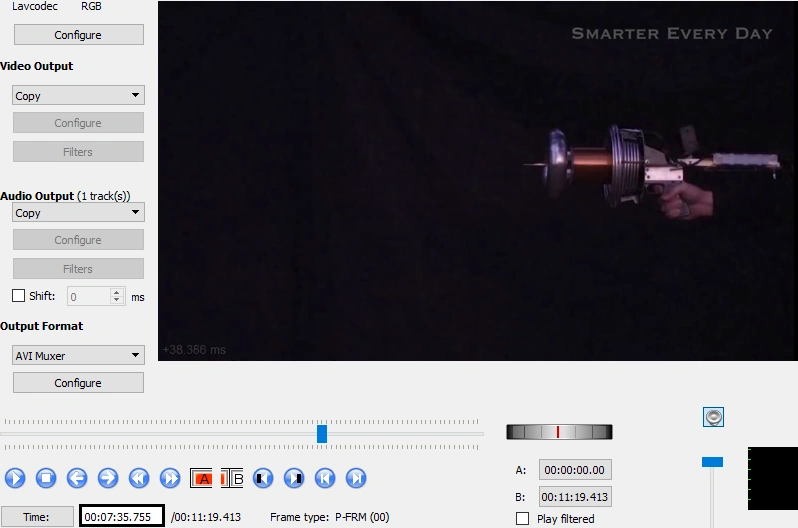
calc has calculation of speed of electric sparks from different sources. First and third examples only provide lower bound, since spark travels distance within 1 frame. Second example has much higher framerate, that allows us to actually see how much does spark travels in 1 frame.
So what's exactly stopping us from using value from second video (specifically ones that account for curving of the path)? What are exact factors that would electric spark speed differs from this one?
1. Exact speed depends on voltage:
Yes, but that particular example has lower voltage than almost all electric sparks, who are capable of traveling much higher distances. It is a lowball.
2. Speed of electric sparks depends on material it goes through:
Yes, different materials have different ionisation energies, mean free path and other molecular characteristics. But we are only concerned with only speed of spark in the air.
3. Speed depends on pressure.
Yes, pressure is (alongside gap length) main factor for determining breakdown voltage and such speed of spark. But most sparks in fiction happen under normal atmospheric pressure, so this point drops
4. Something something amperage.
Speed of electric spark is mostly question of energy and strength of electric field, not
amperage. Using analogy(hoping that CGM won't kill me for using it, if it's wrong analogy), voltage is pressure of the pipe, and amperage is water flow rate of the pipe. How far and fast would water fly from leaked pipe depends on the pressure, how much of it would be leaked depends on the wager flow rate(in our case how electric spark would look like).
Saying it advance that there are many other potential factors that could influence speed(like humidity and temperature, but their influence irl is not big enough to concern us, unlike engineers). At the end of the day, this is just hobbyist site that is often forced to face problems that no one on the Earth can "solve"(like, how much energy is required to create earthquake strong enough to be felt on the other side of Sun sized rocky planet). In that case site doesn't give up, but does everything it reasonably can achieve to make some kind of realistic estimate or some acceptable solution to problem.
Is Mach 14(average speed you would get from second video) reasonable estimate for speed of electric sparks(that have similar enough properties to one in the calc) in fiction. Prolly yes.
It's mostly lowballed, since most fictional sparks would have higher voltage(overall most important part of equation for speed). Calcing some phenomena as 1/3 of its actual speed is better than not being able to calc it's speed at all.
I don't expect for most fictional sparks to have order of magnitude higher or lower speed than Mach 14, so I do think it's good enough estimate for us overall.
Waiting for active CGM(and staff) opinions on my rambling.
(This totally wasn't 2 cents)