
- 35,060
- 41,649
I have no horse in this race.
@DontTalkDT @Executor_N0 @Mr. Bambu Your thoughts on this topic would be appreciated.
@DontTalkDT @Executor_N0 @Mr. Bambu Your thoughts on this topic would be appreciated.
Follow along with the video below to see how to install our site as a web app on your home screen.
Note: This feature may not be available in some browsers.


It’s not “planets”, it’s Earth. I actually wrote a huge OP about that and I hope people read it.Not sure if I see the issue with the idea of planets being scaled large or with subsequent calcs that use the characteristics of the magical planet as if it were a plausible physical construct.

OP doesn't really specify Earth specifically; it's talking about habitable or rocky planets. My point is exactly as I said in my first comment.It’s not “planets”, it’s Earth. I actually wrote a huge OP about that and I hope people read it.

Wouldn't this just invalidate the calcs anyway? As the current planet calcs that are accepted are assuming the parametres for those planets are similar/identical to Earth´sOverall, I feel like I somewhat lean more to letting giant planets be giant planets and just not using the planet parameters for calcs as if they weren't of magic composition. Seems easier to build an objective ruleset around.
This is probably the most thorough response in the thread and I'll try to address everything properly.This is a practice that is definitely easier said than done. And I really do not think there are any one size fits all protocols that could be done about this. Fiction can get really whacky; especially ones intended to be a homage to ancient mythologies that basically consist of infinite sized flat earths that otherwise still appear to have normal atmosphere and normal gravity. And I feel as if planet's with super massive diameter/surface areas to an extent have some things in common with them, but there are other details here and there that really leaves a lot more room for interpretation.
I know a long time ago, someone made a thread trying to make rules against Naruto, Bleach, and One Piece (Especially this one) taking place in planets many times larger than planet earth, but not sure what happened to that or if that got overturned. And while I have read the OP and emphasize on a lot of points brought up, but just because I emphasize with them doesn't mean I fully agree. For one, planets super massive in terms of volume could also just have abysmally low density. I think that's what we ultimately decided with planet Namek. We see on panels that it is super gigantic from the human eye, it is located in the center of three stars "Which also kind of requires being considerably durable for a planet" not to mention the destruction has shown signs of covering interstellar distances. That's another thing, fiction can often full of planets made of materials such as Mythril/Mithril, Vibranium, Adamantium, or Beskar. There are fictional alloys that appear lighter than feathers but still a solid state that appears to be more durable than some of the strongest composite metals known to man.
Likewise, abysmally low density isn't quite the only way to explain massive surface area but not so crazy gravity. Other explanations could be the idea Hollow Earths that were common in a lot of 19th century era Sci Fi novels. Which plenty of verses with giant versions of Earth could very well be structured like them. It was the foundation of underworlds existing in various stories like the Under Dark from DnD or how Donkey Kong Bananza revealed that the "Earth" Mario/DK universe takes place in is a multilayered hollow planet with multiple subterranean worlds withing subterranean worlds. Which would still mean the surface area is massive but probably not the actual volume or by extension the average density. That being said, while it could be pointed out that just like RL, some countries, Islands, or Continents in our world map aren't drawn to scale and aren't accurate reflections of how big each of them are compared to the earth's surface area, which is a concern for One Piece's scale. But as pointed out the 50km wide river is extremely miniscule compared to its length, which is miniscule compared to the Alabasta Island, which is miniscule compared to other Islands, which is miniscule compared to the width of the Grand Line, and in turn is miniscule compared to the rest of the world. Our world map may not be accurate, but it's not like "the entire continent of Asia is smaller than Cyprus Island levels of off," which is kind of the interpretation being used to reject the scope and scale of the 50km wide river. Not to mention, One Piece is still located in a world where sky islands and floating continents exist, has 6 moons; has a lot more ocean to land ratio compared to our earth (And much like a flooded earth), and the grand line (Which is pretty much just their version of an equator) is still wide enough to contain some pretty large land masses.
I am ultimately unsure how to handle One Piece's conclusion, and we should come up with something for sure. As saying "We know it's definitely larger than Earth but we don't know how much" wouldn't help much. Some people have reasonable approaches as calculating diameter/surface area is fine, but would avoid assuming anything else like low surface density, GBE, and stick to assuming surface gravity is earth level. It is common knowledge that in IRL, the surface of planets tends to be much less dense than the cores; and this is true even for gas giants, brown dwarfs, and stars (Even red giant stars). To which hollow earths tend to be the opposite where the cores are technically not as dense as the surface due to being mostly empty space. And that can be the explanation for why it's not portrayed as having super masive gravity. Which is a vastly different story compared to planets with small diameters but high mass, density, gravity. Which is precisely why I am 100% in the mentality that planets where both given mass and given diameter/surface area/volume are given to us should make it fair to calculate surface gravity, possibly atmospheric pressure, and gravitational binding energy. But planets like One Piece where it's much larger than Earth based on rough pixel scales, no author statements, and surface atmosphere is relatively earth like are a different story.
But as for the outcome of this thread, I am ultimately kind of neutral.
These are fair critiques and Rule 3 definitely needs tighter wording to be more objective, that's a valid point. Rule 2 assuming authors know the rocky planet size limit is also a reasonable concern, though I'd argue the threshold existing regardless of whether the author knows it is what matters for our purposes, not whether they consciously intended it.OP doesn't really specify Earth specifically; it's talking about habitable or rocky planets. My point is exactly as I said in my first comment.
To add to it: In my view, the assumption in Rule 2 that an author would acknowledge a not widely known limit for the size of natural rocky planets, rather than shown size, is at odds with the idea of respecting the author's intent. We can't know the author's intent (which is why we often respect it quite little), but if I were to list things by the likelihood of reflecting or even factoring into the author's intention for planet size, then I would put the depicted size above the upper size limit for rocky planets.
From what I read in the comments, I also think Rule 3 is not functional. Reading it in the OP I initially thought it was about author statements on planet size specifically. But from the comments, it sounds like scaling is allowed if it seems like some measure of author intent is involved, which is subjective. A more objective framework would be needed for what are supposed to be the exceptions.
As for technicalities:
- The rules obviously would need definitions of Earth-like and rocky planet. Like, an inhabited rocky planet with regular humans on it should probably not count for either option, if it turns out that it is held together by a black hole in its center and a layer of magic in between. Any idea of realistic composition is out the window at that point.
- You would need some additional ruling framework to clarify how to deal with scaling that isn't about planet size, but has planet-size implications.
Overall, I feel like I somewhat lean more to letting giant planets be giant planets and just not using the planet parameters for calcs as if they weren't of magic composition. Seems easier to build an objective ruleset around.

To have same surface gravity as Earth, Blue would need to be either:Likewise, abysmally low density isn't quite the only way to explain massive surface area but not so crazy gravity. Other explanations could be the idea Hollow Earths that were common in a lot of 19th century era Sci Fine novels
While lots of these are indeed valid concerns, there could still be other things we do not know about. Because as mentioned, when it comes to pretty much any RL planet, the surface that walk on including the ocean is the least dense part of the planet where as the closer we get to the inner core, the denser it gets. And for all we know, One Piece fictional planets such as Blue could be following the opposite logic. With likely missing and/or replaced with much lighter substances for all of its mantles or the core. That, and the crust layer holding up the seas and land is made of a substance similar to Mithril (The element from fantasy works like LotR and DnD that's lighter than feathers but harder than diamonds and many times more tougher than even some of the strongest composite alloys known to man).To have same surface gravity as Earth, Blue would need to be either:
1. Have very low density. Around 50 kg/m^3, in same realm as styrofoam.
2. Be a Hollow Earth. Assuming interior is air, hard surface shell should be around 2-4 km wide(depends of exact density). Seemingly contradicted by Sea Floor being 10 km deep, and Reverse Mountain being taller than 10 km(from here).
But even if one of these options above were correct, we still would face problem of high escale velocity. Assuming same surface density as Earth, Blue would have escape velocity 121 km/s(OP is slightly wrong on this: if Blue had same density as Earth, it's escape velocity would be not 121 km/s, but 1350 km/s).
Atmosphere would be dominated by light airs, like Hydrogen and Helium(could be explained as Blue not having such materials in abundance from the start, from some astrophysical reason). It would be much bigger and extends much higher into space(which seems to be true for Blue). And yeah, pressure.
OP says that liquid water at surface would be impossible under 11,920 kPa pressure. Maybe I missing something important, but phase diagram of water tells me that it's possible to have liquid water under such pressure with room temperatures.
It's small nitpick thought. Raindrops can exists as high as 114,000 km in One Piece(based on same map that is currently used for measuring size). So Armstrong limit for Blue is massively higher than for Earth: at least 114000 km(One piece sups prolly can provide example of liquid water existing at much higher altitudes) vs 19 km. Armstrong limit is defined by amount of pressure. To make example, at 114000 km altitude Blue atmosphere has x10 higher pressure than Mars. I didn't find a method to exactly quantity pressure at surface for Blue yet, but intuition tells me it wouldn't be low number.
I can prolly add more(including about normal limit for rocky planets), but I think we should tackle this problem first:
Oda didn't thought allat. It seems undeniable that he envisioned for Blue to much bigger than Earth, but I don't think he has some concrete number in mind. And he certainly didn't through implications of such a big size, and broadly envisioned for Blue to be Earth like(as in have similar surface density, having liquid water at surface).
Best course of action in my opinion, is to search through work for relevant for size facts(like stated number of islands), and create several different methods to calculate size. One calc that gives us 1,576,000 km for diameter through comparison of several maps is not very strong support. Several of such calcs, plus fact that horizon being 50 km supports big sizes, is good enough support(in absence of several other methods that give totally different results).
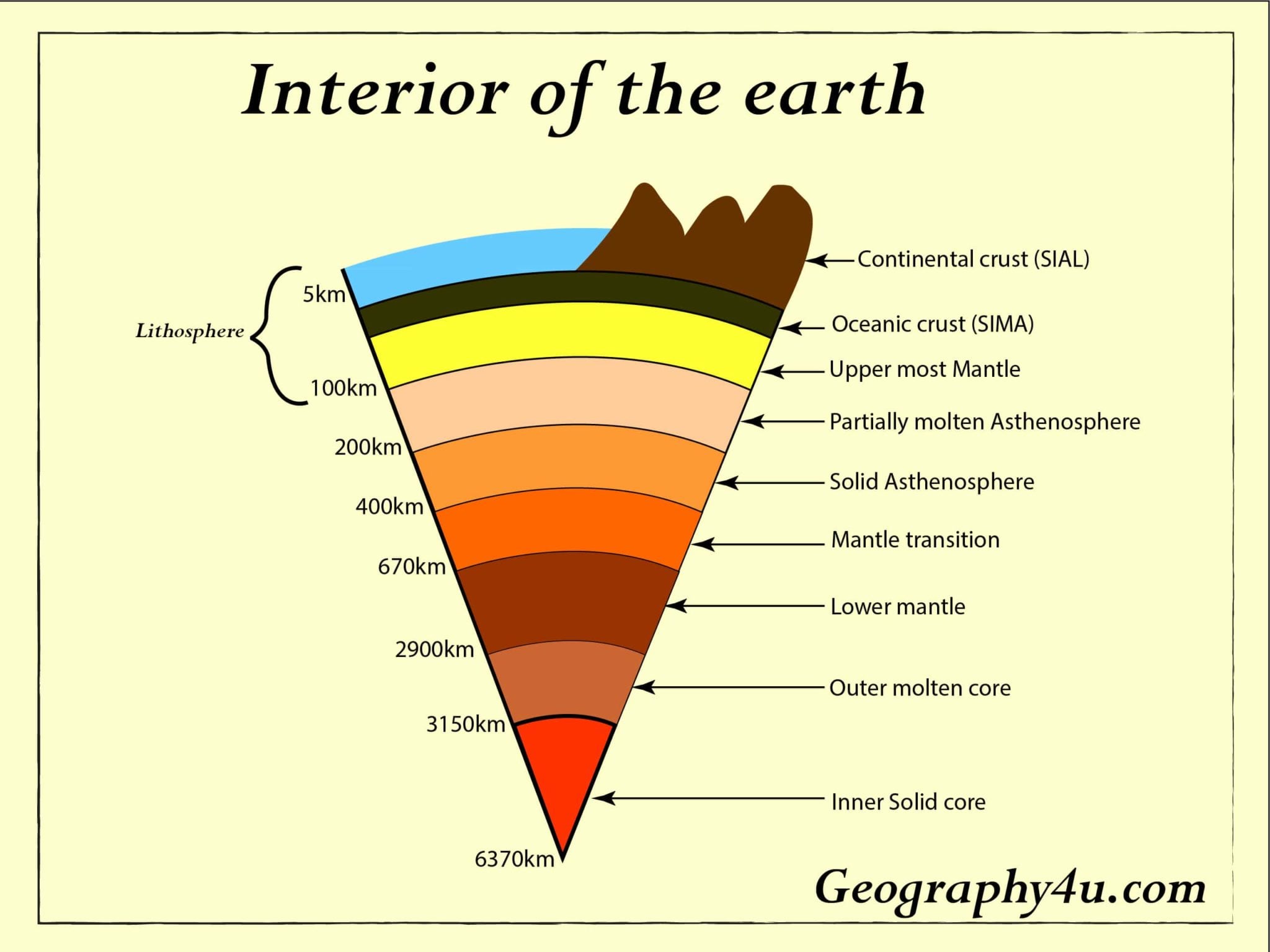
Supporters of verse obviously want to be able to calc things like earthquakes. And for our earthquake formulas to work, Blue crust would need to have material with broadly similar physical and mechanical properties to Earth Cryst. Which includes density for obvious reason. And crust layer that is big enough to conduct earthquakes, and has similar enough composition for our formulas to apply, would invariably result in much higher values of surface gravity than Earth ones(and Blue doesn't seems to have abnormally strong gravity).With likely missing and/or replaced with much lighter substances for all of its mantles or the core. That, and the crust layer holding up the seas and land is made of a substance similar to Mithril

This is a practice that is definitely easier said than done. And I really do not think there are any one size fits all protocols that could be done about this. Fiction can get really whacky; especially ones intended to be a homage to ancient mythologies that basically consist of infinite sized flat earths that otherwise still appear to have normal atmosphere and normal gravity. And I feel as if planet's with super massive diameter/surface areas to an extent have some things in common with them, but there are other details here and there that really leaves a lot more room for interpretation.
I know a long time ago, someone made a thread trying to make rules against Naruto, Bleach, and One Piece (Especially this one) taking place in planets many times larger than planet earth, but not sure what happened to that or if that got overturned. And while I have read the OP and emphasize on a lot of points brought up, but just because I emphasize with them doesn't mean I fully agree. For one, planets super massive in terms of volume could also just have abysmally low density. I think that's what we ultimately decided with planet Namek. We see on panels that it is super gigantic from the human eye, it is located in the center of three stars "Which also kind of requires being considerably durable for a planet" not to mention the destruction has shown signs of covering interstellar distances. That's another thing, fiction can often full of planets made of materials such as Mythril/Mithril, Vibranium, Adamantium, or Beskar. There are fictional alloys that appear lighter than feathers but still a solid state that appears to be more durable than some of the strongest composite metals known to man.
Likewise, abysmally low density isn't quite the only way to explain massive surface area but not so crazy gravity. Other explanations could be the idea Hollow Earths that were common in a lot of 19th century era Sci Fi novels. Which plenty of verses with giant versions of Earth could very well be structured like them. It was the foundation of underworlds existing in various stories like the Under Dark from DnD or how Donkey Kong Bananza revealed that the "Earth" Mario/DK universe takes place in is a multilayered hollow planet with multiple subterranean worlds withing subterranean worlds. Which would still mean the surface area is massive but probably not the actual volume or by extension the average density. That being said, while it could be pointed out that just like RL, some countries, Islands, or Continents in our world map aren't drawn to scale and aren't accurate reflections of how big each of them are compared to the earth's surface area, which is a concern for One Piece's scale. But as pointed out the 50km wide river is extremely miniscule compared to its length, which is miniscule compared to the Alabasta Island, which is miniscule compared to other Islands, which is miniscule compared to the width of the Grand Line, and in turn is miniscule compared to the rest of the world. Our world map may not be accurate, but it's not like "the entire continent of Asia is smaller than Cyprus Island levels of off," which is kind of the interpretation being used to reject the scope and scale of the 50km wide river. Not to mention, One Piece is still located in a world where sky islands and floating continents exist, has 6 moons; has a lot more ocean to land ratio compared to our earth (And much like a flooded earth), and the grand line (Which is pretty much just their version of an equator) is still wide enough to contain some pretty large land masses.
I am ultimately unsure how to handle One Piece's conclusion, and we should come up with something for sure. As saying "We know it's definitely larger than Earth but we don't know how much" wouldn't help much. Some people have reasonable approaches as calculating diameter/surface area is fine, but would avoid assuming anything else like low surface density, GBE, and stick to assuming surface gravity is earth level. It is common knowledge that in IRL, the surface of planets tends to be much less dense than the cores; and this is true even for gas giants, brown dwarfs, and stars (Even red giant stars). To which hollow earths tend to be the opposite where the cores are technically not as dense as the surface due to being mostly empty space. And that can be the explanation for why it's not portrayed as having super masive gravity. Which is a vastly different story compared to planets with small diameters but high mass, density, gravity. Which is precisely why I am 100% in the mentality that planets where both given mass and given diameter/surface area/volume are given to us should make it fair to calculate surface gravity, possibly atmospheric pressure, and gravitational binding energy. But planets like One Piece where it's much larger than Earth based on rough pixel scales, no author statements, and surface atmosphere is relatively earth like are a different story.
But as for the outcome of this thread, I am ultimately kind of neutral.
 science.nasa.gov
 science.nasa.gov
That was what I was trying to get at here, but saying the OP planet can be calced to be a superplanet without being sun-sized, as those aren't the same claimsIt is very safe to assume and consider the OP’s planet size to being a Super Earth/Exoplanet without necessarily being Sun sized from a fan made calculation that manages to assume a massive diameter for a planet like that.
Yeah, although I can confirm there is the formerly theorized Mega Earths that is like 10 times the size of the Earth or higher too.That was what I was trying to get at here, but saying the OP planet can be calced to be a superplanet without being sun-sized, as those aren't the same claims

Although there is one more thing I need to also point out as well.That was what I was trying to get at here, but saying the OP planet can be calced to be a superplanet without being sun-sized, as those aren't the same claims
Yeah what you're saying makes sense. Fictional planets have their rules, but their rules can also apply in our world and since we're using real life mathematics and physic for both real life and fictional planets, we should also take note of the limitations of said formulas when it comes to each subject here. If these Earth-like giant ass planets wouldn't work in an IRL setting, why should we use a formula that relies on real life settings and limits to find the parametres of that planet. For these gigantic ass planets from these xianxia medias or One Piece, we'd actually have to invent a whole new formula at that pointAlthough there is one more thing I need to also point out as well.
I get the fictional angle and argument, I really do, but it also works both ways as well as rock solid planets portrayed in fiction that are bigger than Earth isn’t actually unrealistic by any means, in fact, I find to being the opposite as in, it is completely possible when it come to planets irl as well.
Anyway, fanmade calculations are directly using mathematical formulas that is used for theoretical physics and astro physics as well for all calculations related to the size of a planet.
I can’t afford to overlook the scientific angle of such calculations as this is a important concern and a valid concern from the OP.
Let me make myself clear, I actually find the concerns of the OP perfectly valid and solid imo from a scientific angle including the mathematical aspects of such calcs when trying to guesstimate a planet size that is bigger than our own Earth and all.
The opposition points imo doesn’t really invalidate the concerns the OP has presented when it comes to large planet size calculations that involve mathematical formulas for a astro physics calculation as well
Tbf, astrophysicists have actually managed to calculate the size of planets outside of our solar system as they have used their own mathematical means to measure such planets and we already have measurements of all the planets in our solar system.Yeah what you're saying makes sense. Fictional planets have their rules, but their rules can also apply in our world and since we're using real life mathematics and physic for both real life and fictional planets, we should also take note of the limitations of said formulas when it comes to each subject here. If these Earth-like giant ass planets wouldn't work in an IRL setting, why should we use a formula that relies on real life settings and limits to find the parametres of that planet. For these gigantic ass planets from these xianxia medias or One Piece, we'd actually have to invent a whole new formula at that point
Technically fiction is more inspired by reality rather than the other way though because while it is true fiction has its own thing that differ heavily from reality, fiction get their inspirations from irl ideas, concepts, views, beliefs, and so on.Yeah what you're saying makes sense. Fictional planets have their rules, but their rules can also apply in our world and since we're using real life mathematics and physic for both real life and fictional planets, we should also take note of the limitations of said formulas when it comes to each subject here. If these Earth-like giant ass planets wouldn't work in an IRL setting, why should we use a formula that relies on real life settings and limits to find the parametres of that planet. For these gigantic ass planets from these xianxia medias or One Piece, we'd actually have to invent a whole new formula at that point


I feel like this thread got bogged down with discussion as to whether or not specific verse should have planet calcs rather than the core discussion of having rules in place for planet calcs at all. It's kind of a shame, since the former should've been saved for other threads as to not bog down this one, and unless people want to revitalize this it seems kind of dead in the water for the time being :/Is there any consensus for this thread or can any verse calc planet size?

Bump againBump


