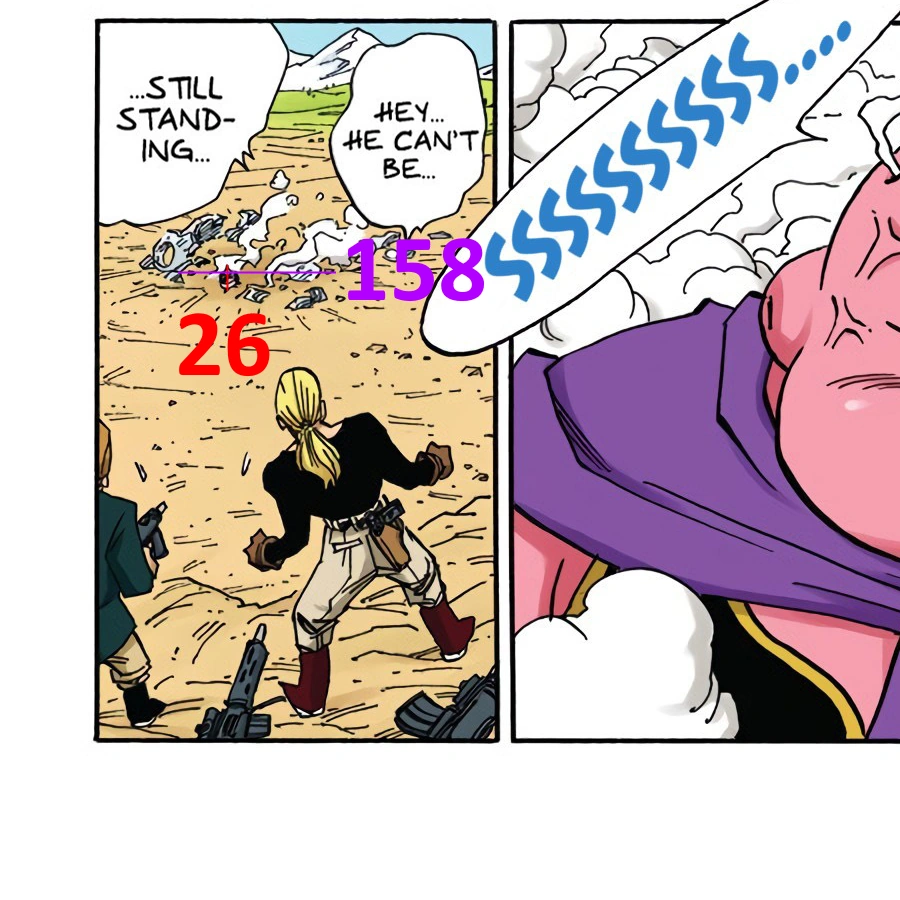
Well, to split hairs just a teensy bit more:
On our Explosion Speed Calculations page,
we have a section for figuring out the timeframe here.
So if we use
this calculator from that section, with a radius of
6.7915692308 meters, an explosive weight of
0.21 kg, an explosive type of RDX (since A-IX-1 is mostly RDX), then we get a timeframe of 14.81 ms, or 0.01481 seconds.
This is because we don't want to be using the
detonation velocity which is how fast the shock wave travels through the explosive material itself, but the blast wave speed which slows down significantly with distance as the explosion spreads outward, even to a distance as low a 6.79 meters.
Based on that, I would say the corrected result would be: 6.7915692308/(0.0026833584 + 0.01481) =
388.237 m/s (Supersonic)
Still an upgrade for the characters, it turns out.
Yeah I really wouldn't say that's fair use here, it very much
isn't RDX, the blast yield itself is like 8-C or close to it, which makes your use of 0.21kg extremely misleading and not applicable for this feat.
Obviously this is because the energy of the explosive far eclipses an actual RPG, thus treating it as a low grade and small amount of RDX downplays it a tad arbitrarily when we can
see visually it's detonation speed decay would be far slower as a by product of its energy being far higher with the same mass.
And because of that, the speed decay doesn't quite work 1:1, it isn't losing anywhere near as much energy expanding through the air, and thus losing as much speed, as a standard rocket blast would. Hell using the fact it was able to blow apart his house at the edge, you could work backward and actually find the detonation decay via some ISL slop, and I can assure you it'd be quick a lot higher than what you're suggesting, and also very much not calc stacking given it's all the same feat and panel.
Which is to say. The warhead is like 8-C in terms of total yield. Legendarium can easily calc this, he already has the crater diameter, it should be around there, or close, might be 9-A, but all the same.
The explosion visibly blows apart an entire house and fills a multi-meter radius with destructive overpressure, which is
way beyond what a real RPG charge could do.
If we're scaling the time via the blast radius, we can't just ignore the
destruction it causes, then by definition the explosive is not behaving like a normal 0.21kg RDX. Thus plugging 0.21 kg RDX into a real-world blast calculator while also accepting a 6.8m destructive radius is inconsistent and drags the result down. It's wrong because it's
objectively neither RDX or is
similar enough yield to translate directly.
If you really wanna drag it down further, you kind of need to:
- Either treat it as a realistic RPG (much lower yield, much smaller effective radius)
- Or back-solve an equivalent TNT mass / yield from that and use that in the speed decay formula.
Using the same panel (blast radius + house destruction) to fix the yield and timeframe is not calc stacking either as mentioned, it’s just solving one event with multiple observable quantities in the same scene. What
is arbitrary is forcing in a tiny real-world warhead mass that obviously can’t reproduce what’s on screen, and then treating the big boy blast's speed decay as 1:1 with the much less powerful explosion.
As said, anything else is just splitting hairs, it can't really drop much lower (I mean it can) without extensive extra work and it'd be negligible difference tbh.