The current
Doom's gate calculation has some flaws which I think should be addressed
Issue 1
In
Floxy's Thread we determined ang sizing shots of things in space is inconsistent and gives inaccurate results, especially applying for this case as both BC and Bleach were done by the same studio. These shots are usually made for dramatic effects and style rather than to showcase the actual size of an object. We can notice a trend from
these calculations is that in ang sizing, using diameter to gauge distance from pov results in a value orders of magnitude less than what the true size would be (deflation basically), so if we flipt the script like in the BC calc which does the opposite (using distance from POV to find diameter) the reverse ends up happening and instead of deflation we are met with an inflated value far beyond what it should logically be.
As such I believe using ang sizing to find the size of an object is generally too inconsistent to be used.
There is a glaring issue I have with this approach of yours. The Bleach example doesn’t even
seem comparable to Black Clover's scenario The issue is you’re treating
Doom's Gate like the
moon, rather than a giant object that’s muchhhhhh closer and smaller and affecting the narrative, like the meteor that was going to destroy the Seireitei.
The moon is roughly 384,400 km from the earth with a diameter of roughly 3,474 km, while the Dooms Gate meteorite is roughly 100-160 km, that’s a 3,844x difference in distance and over a 20x difference in size.
Obviously trying to ang size an object like the moon, or another celestial object like planet or sun that has relatively fixed distances and sizes would lead to far more inflated results because of how far away they are. Those celestial objects already have fixed sizes and distance so whatever calc you use will be inflated regardless. This is why it’s better to choose the distance or size that aligns most with the narrative. The moon and the Dooms Gate have
vastly differences distances and sizes and serve completely different purposes. The Bleach scenes you used in your example simply uses the moon and sun as a celestial objects that are large enough to be viewed in background,
not some object that’s actually going to crash into the planet and affect the narrative.
Issue 2
The calculated diameter is around 160 km but up close the value is completely contradicted, we can tell just by looking that
this is nowhere near 100 km due to how comparable and visible asta is to the meteor (
this link will take you to the actual 2 minute scene of him cutting the large rock). When
pixel scaled the result actually comes out as little as a little over 100 meters. Now this might be dismissed to be a case where a character is only visible for the watcher so we know where the character is, rather than to show the size of an object but I don't believe this is the case here.
You used possibly the worst, and most inconsistent scene for sizing. What you're suggesting above is narratively inconsistent. Conrad was essentially on his last crumbs of life and at his wits end. Furthermore his intention was to use Dooms Gate to destroy to not just the country, but
the world itself before his life ended since he sacrificed the rest of his life span to activate it, which he says himself:この命尽きる前に、この国を、この世界を、救わねばならない…
"Before this life ends, I must save this country, this world..."
At the minimum that’s roughly in the ballpark of the current
Dooms Gate calculation that's accepted (594.1 petatons) and
similar to the accepted commons feats for surficial destruction that's accepted referenced on this site (646.57 petatons) so narratively it’s consistent. A meteorite with the diameter of 140 meters has the
impact energy of approximately 100 megatons, which can be found
here. I highly doubt Conrad's intention was to summon something so tiny with such little impact given how his intention was to cleans the planet.
Even in early BC it was stated Yami and Jack allegedly shaved down a mountain in a casual scuffle, so what you’re suggesting is narratively inconsistent.
Unlike situations like those where the argument would actually be invalid, here Asta (or rather his swords and wings) is VERY large, nowhere near the small speck that he should be if they just wanted to show his location. One might also defend it saying it is a perspective shot but that is not the case because with perspective shots
things of the same size extending away from the POV shrink in pixel count. And we see Astas sword remains essentially identical throughout so we can safely say the visible size isn't messed up by perspective.
This leads me to believe this scene should very much work as a good representation of the meteors size, making it over 1000x smaller than what the angsizing end suggests. It's more direct and uses a more reliable method for measurement than what the current calc does.
Conrad and Asta were fighting ontop of the demon-skull, so Doom' Gate was summoned right above that location in the exosphere (
which the light novel AND movie supports), and at the edge of the country. The demon bones
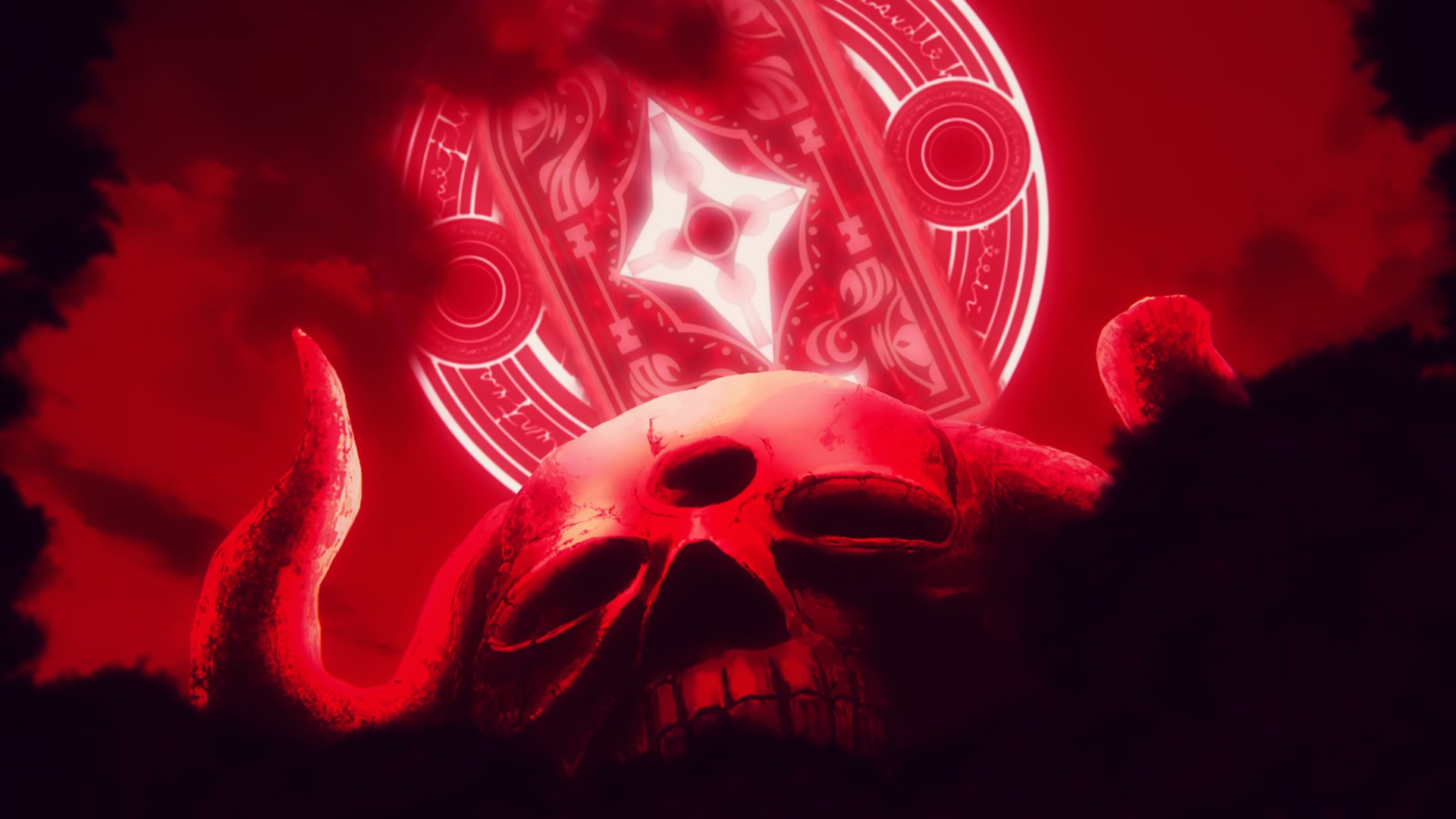
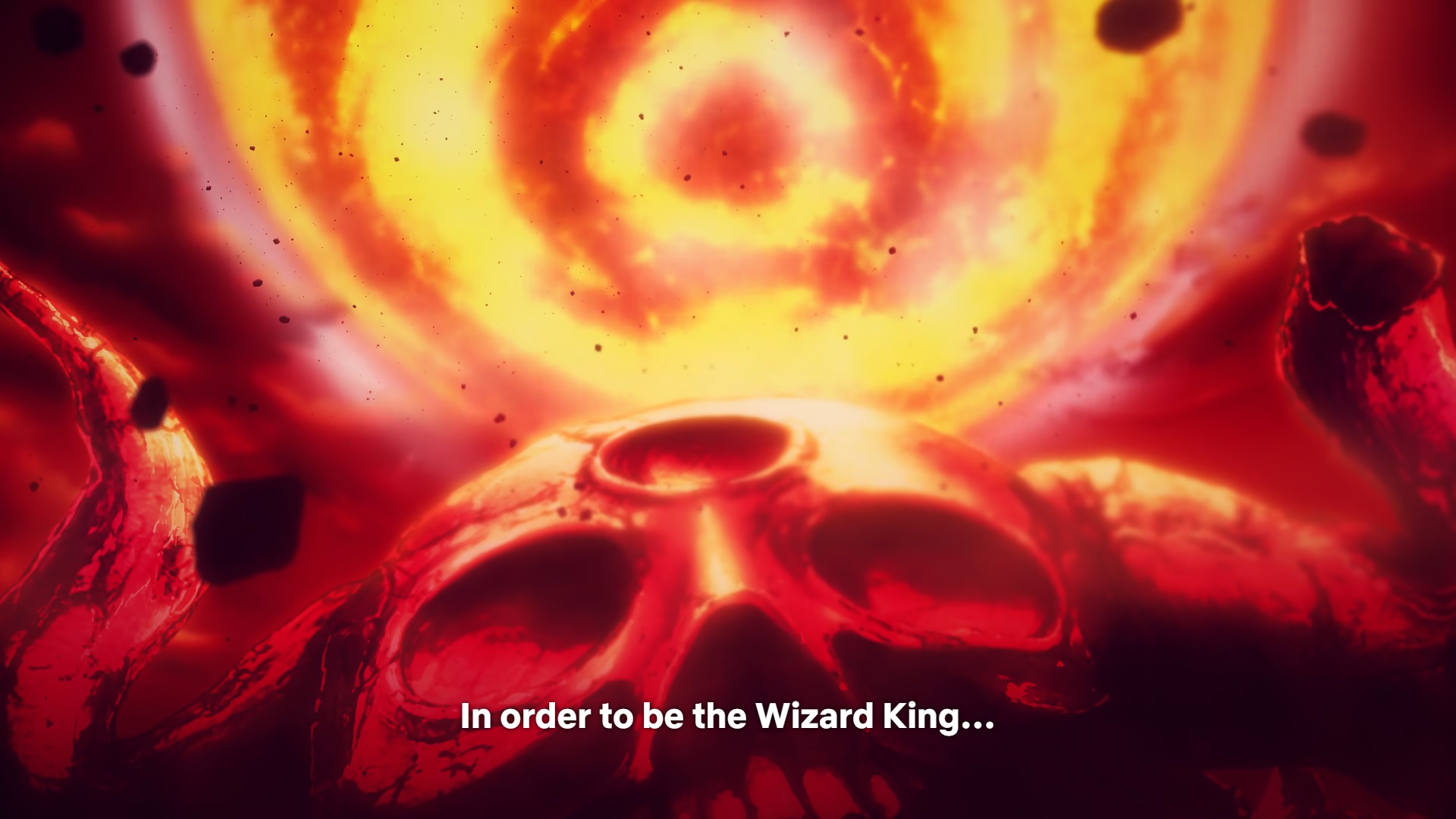
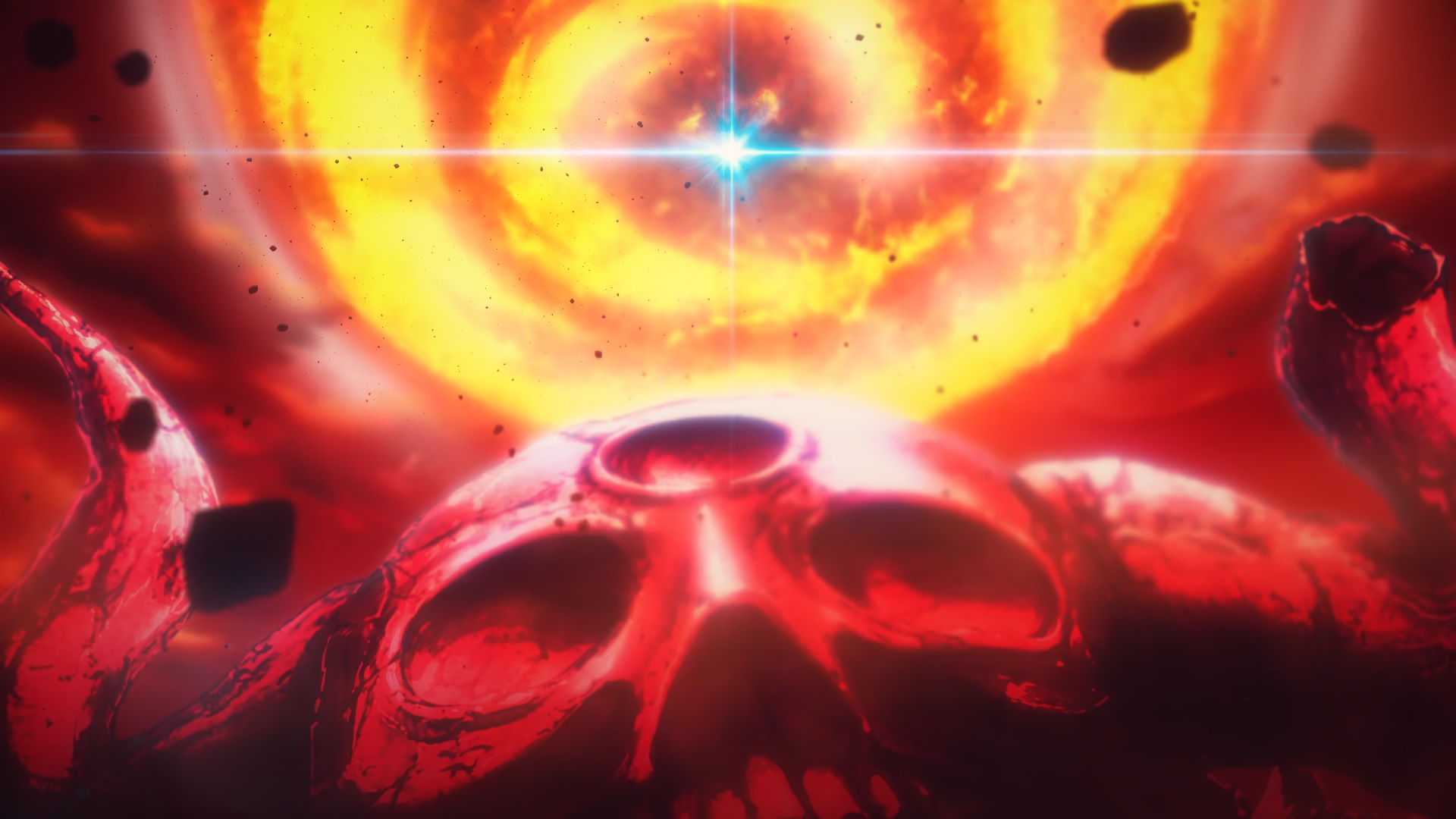
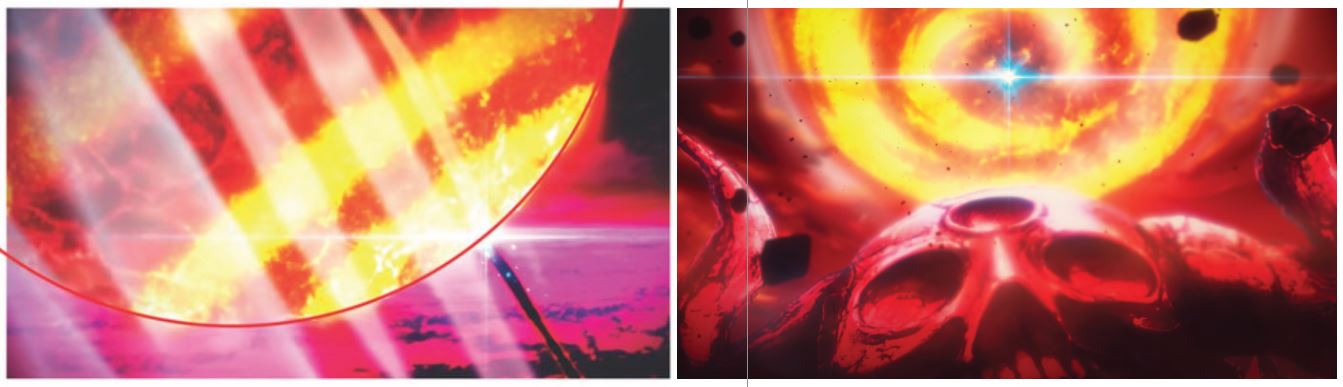
is the very first relevant depiction we see of its scale and it literally turns the whole sky red in the country red and, and the scene of the meteor ablating above said bones is the most consistent shot, since it was shown multiple times at different points in the story. Edward froze the entire Yultim volcanic belt, which is in the strong magic region, and even
THAT space was illuminated red. The scene is using a landmark aka the
demon bones-skull to convey it’s size and essentially tell us that this object that was summoned at the edge of the country, high in the exosphere, is so large that it's extremely visible everywhere in the country and is substantially affecting atmosphere.
That “2 minute” scene you picked out as I said earlier is the
most inconsistent shot in the entire movie. It's simply meant to capture the action in one scene and show us where Asta actually is and what he's doing. It’s literally too difficult and impossible to portray Asta and the entire meteorite in the same frame with detail at their true sizes. I don’t think we’re going to sit here and pretend that damn near every anime doesn’t have some inconsistencies here and there when it comes to some scenes with ginormous objects, so I find it odd that we're piggy backing off of one inconsistent scene to completely ignore the narrative.
In addition,
why are we skipping the ONLY scene we have of Asta and meteorite being truly parallel together/ within the same plane of geometry? That scene doesn't utilize any weird angles like the one you put forth and it
depicts his body, and the two giant swords stabbed in the meteor as a stream of anti-magic and a cluster of light, with no distinguishable distance or features, whatsoever. The giant swords of magic and anti-magic that he generated are too small to be depicted.
Even if they were 1 km long, it would still be too small to distinguish.
I overlaid the image with the size of Asta from that "2 minute scene” you supplied with the image of Asta and the meteor parallel to one another in relation to the meteor and the size difference is vast. You can’t even Asta's body yet alone any distinguishable features like his giant swords so why you specifically chose that
ONE scene is beyond me.
With that being said, the
VERY first scene that revealed the size of
Dooms Gate's door, is relative to the other scenes that was used for the accepted calc.
When the meteorite first emerges, we see it's
size relative to the demon-bones as it begins to ablate. Later, that exact same scale, and scene is used to depict Asta interacting with the meteorite as he plunges giant Demon-Slayer and giant Elsdocia into. In that scene Asta and his weapons are displayed as a
giant cluster of light and anti-magic in the exosphere and this is consistent with the
same scene that depicted them as clusters of light and darkness when they were parallel to the meteorite. That same scene of the demon bones is repeated multiple times,
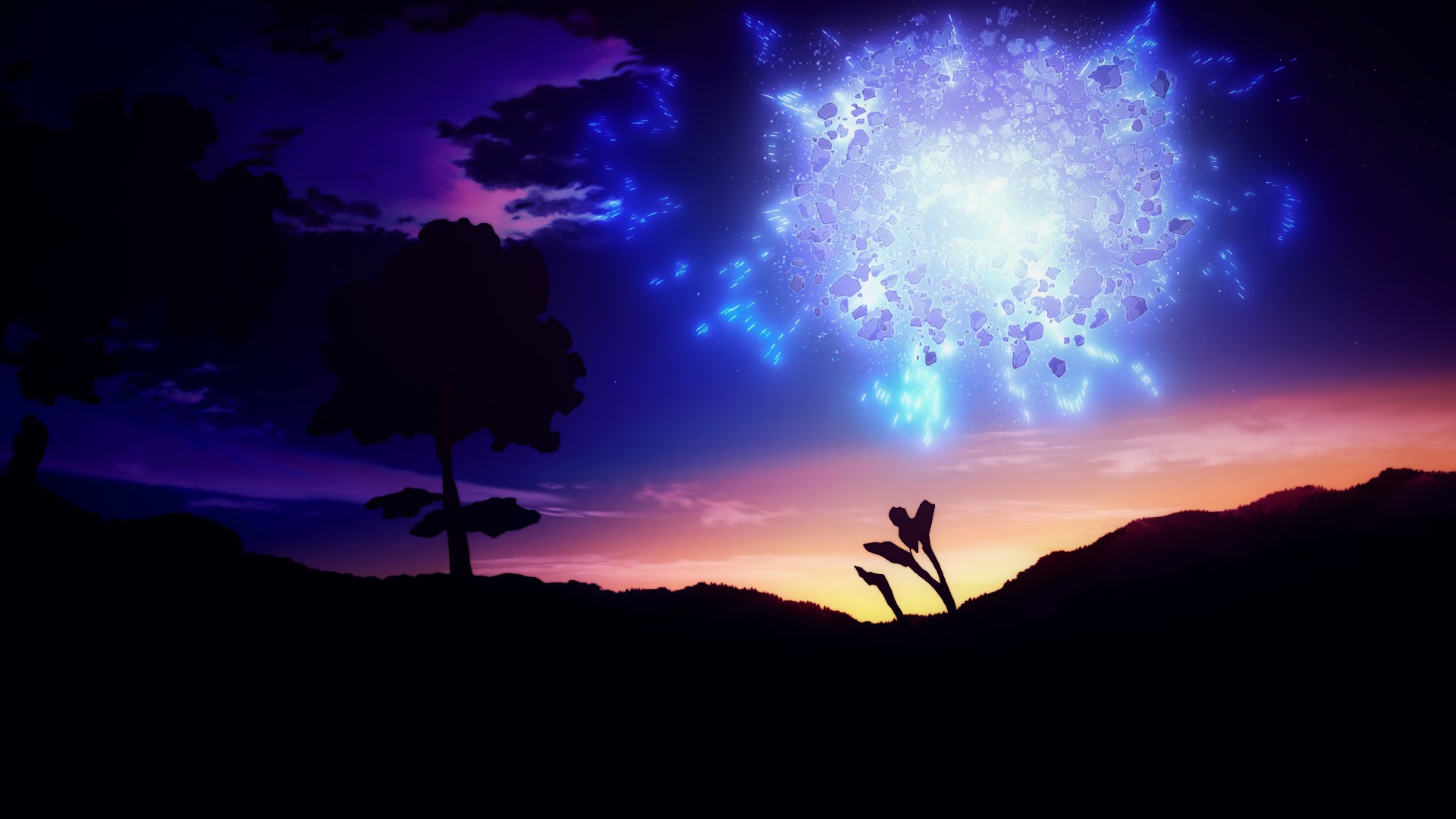
unlike the others. You chose the most inconsistent scene and used it as a way to tremendously deflate the calc and ignored every other instance that essentially that views Asta as indistinguishable. We're only ever shown Asta's distinguishable features when it's literally just him and the meteor. The scene with the demon-skull has the most consistency and isn't used just "once" it's actually a pretty pivotal frame of reference. Lastly, the debris from meteor’s destruction in exosphere can visibly be seen from the planet’s surface below.
That same destruction is vast enough to illuminate a large portion of the night sky despite the fact it’s in the exosphere.
Conclusion
We already consider pixel scaling as preferable and more accurate than angsizing. Given that the angsizing method in question is an extraordinarily inconsistent one which has recently been rejected, and the fact that straight forward pixel scaling HEAVILY contradicts it, I believe the calculation should be deemed unusable.
For replacement we can just use
this calculation for the destruction of the clover kingdom, as the meteor was said to be capable of doing so. That is unless the supporters find a better alternative for replacement
I think the calc should certainly stay since:
1.) It’s
value is consistent with Conrad wanting to destroy
the world and aligned with
the accepted common feat on this site for doing so.
2.) All portrayals of the meteor in comparison to the verses landmarks is consistent, and shows no distinguishable features of the human sized characters that interacts with it.
3.) The most
repeated AND consistent scene that uses relevant landmarks (demon-bones) all share the same consistency. Again
this scene from space is relatively consistent
with this scene from the ground which serves a consistent frame of reference is also supported by the narrative.






 )
)