- 4,239
- 4,084
- Thread starter
- #41
The assumption that it is fragmentation based on seeing cracks is flawed, when we see pebbles coming out from the volume, cracks don't make up the crater, they're just there as a natural effect of it.
Follow along with the video below to see how to install our site as a web app on your home screen.
Note: This feature may not be available in some browsers.
The assumption that it is fragmentation based on seeing cracks is flawed, when we see pebbles coming out from the volume, cracks don't make up the crater, they're just there as a natural effect of it.
Vzearr has argued that this isn't possible for concrete. That for short impacts (which these feats would be), it only cracks, rather than displacing.This is a wall. The material was possibly not flung out. Instead, part of the wall was fragmented and pushed further into the wall (essentially displaced out the other side of the wall). In that case, the material with cracks you see is actually the material that was replaced from the crater. Fragmentation would be the way to go here.
This feels like it's talking past the newer arguments. It's not just "there are cracks", it's "there are cracks, which does not line up with the volume millimeters away from it being completely pulverised, so something unrealistic is going on", and "pulv doesn't really explain the lack of volume, since the dust would need to leave the scene abnormally quickly, and this would also be the case if the fragments were bigger, so they're all equally valid explanations, leaving frag with the most support due to the crater being more in line with that".The assumption that it is fragmentation based on seeing cracks is flawed, when we see pebbles coming out from the volume, cracks don't make up the crater, they're just there as a natural effect of it.
Not necessarily, we see pebbles flying out, thats more in line with what the craters destruction is like, cracking, is again, apart of the crater being destroyed the way it was destroyed; a natural effect of getting thrown into a wall. Violent fragmentation typically results in noticeable physical disruption, like large cracks.leaving frag with the most support due to the crater being more in line with that".
With only that few, I'm not inclined to agree. Simply by some parts of the body hitting the wall force, or some parts of the wall being closer to the edge, a few parts will be affected differently; even in frag situations you'd expect, by sheer luck, for a few pebbles to be created in that interaction.Not necessarily, we see pebbles flying out, thats more in line with what the craters destruction is like
Does fragmentation not lead to cracks past the boundary of the large fragments?cracking, is again, apart of the crater being destroyed the way it was destroyed; a natural effect of getting thrown into a wall. Violent fragmentation typically results in noticeable physical disruption, like large cracks.
But your only evidence for the wall being fragmented is the fact that the cracks are large, when that could apply to all types of destruction values, my reasoning is more backed up.With only that few, I'm not inclined to agree. Simply by some parts of the body hitting the wall force, or some parts of the wall being closer to the edge, a few parts will be affected differently; even in frag situations you'd expect, by sheer luck, for a few pebbles to be created in that interaction.
All destruction values eventually have large cracks. Further away portions get less and less energy. But for the cracks to be that big that close, it seems like the bulk of it would've been frag.But your only evidence for the wall being fragmented is the fact that the cracks are large, when that could apply to all types of destruction values, my reasoning is more backed up.
That's not how it works. I don't think so at least.All destruction values eventually have large cracks. Further away portions get less and less energy. But for the cracks to be that big that close, it seems like the bulk of it would've been frag.
Everything displaces if you hit it hard enough? Concrete isn't an immovable object.Vzearr has argued that this isn't possible for concrete. That for short impacts (which these feats would be), it only cracks, rather than displacing.
Does your knowledge of material properties give you any particular view on that?
If you assume the matter is off-screen, then it can be off-screen in large chunks. Being flung off-screen alone doesn't imply pulverization.Not necessarily, it's more likely that they're offscreen. For it to be pulv you also don't need to see a dust cloud, alot of pulv feats include there just being nothing.
There is no legitimate reason to discount the fragmented wall itself from the volume for analysis. It was affected by the same process and we don't see 99.9% of the rest of the material that has been affected.There is no volume seen other than small pebbles, we should go with that.
If this was the way then it would be compressive strength lol, making it either v frag or pulv from our standards.This is a wall. The material was possibly not flung out. Instead, part of the wall was fragmented and pushed further into the wall (essentially displaced out the other side of the wall). In that case, the material with cracks you see is actually the material that was replaced from the crater. Fragmentation would be the way to go here.
Not necessarily, we see small fragments.If you have a feat where the material could not be flung out of the crater (so not as in option 1) but there is no reasonable way the material was displaced in the direction of the crater (so not as in option 2) then the feat just makes no sense. The volume just disappeared to nowhere. Unless it behaves like actual material compression (possible, but something I would consider an exception), I would go with fragmentation because that is what we see.
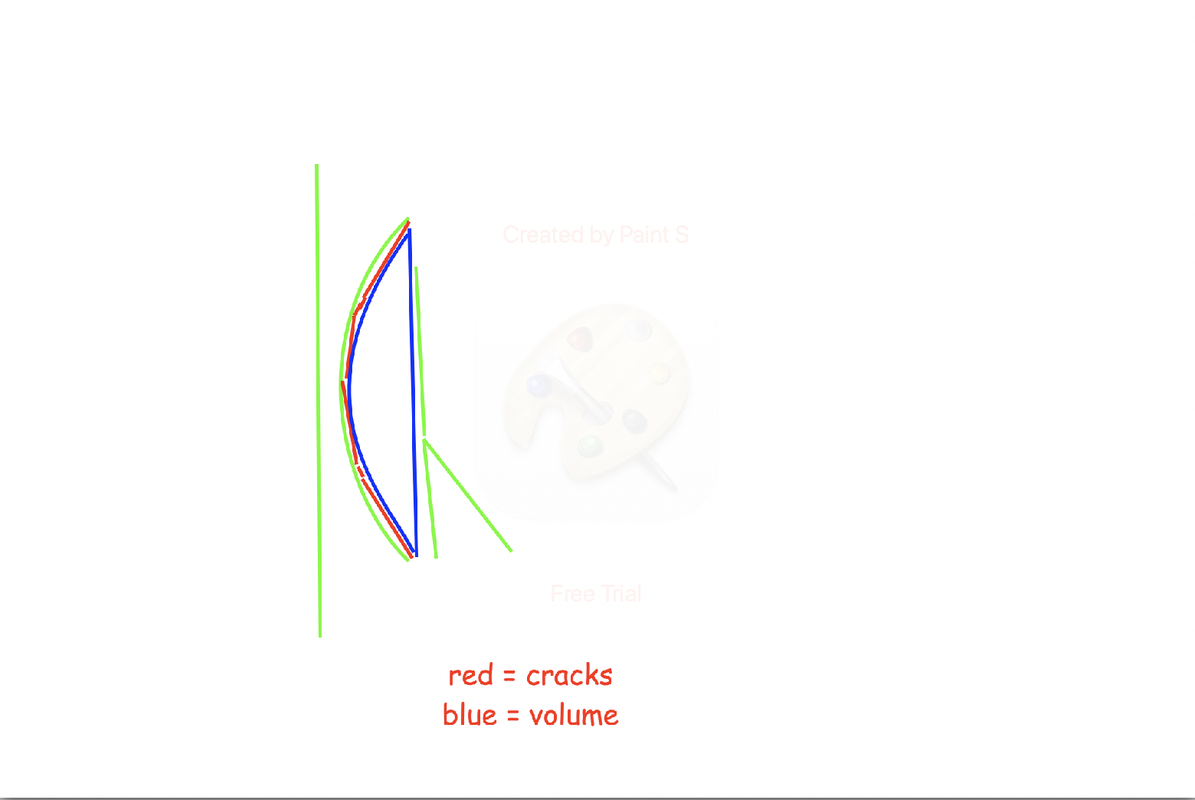
Being pushed inwards is compressive strength which is why pulverisation would be better suited for the second feat, we also don't actually see any fragments and only see cracks, making pulverisation much more likely.Hello, I'm interested in this discussion because I've thought about this topic before. I want to share two feats that fit perfectly into the debate:
- Dave jumps on top of a fighter and leaves a large crater on the ground.
![]()
- Young Saitama is slammed into a wall and leaves a crater.
![]()
In the first case, although it may seem like fragmentation, it's evident that a large portion of the volume has been pulverized or compacted, so pulverization seems like a reasonable option. In the second feat, pulverization has been considered, but I've argued that the wall might be fragmented and simply pushed inward, making regular fragmentation a more suitable classification.
Both of those examples look like textbook fragmentation to violent fragmentation to me.Hello, I'm interested in this discussion because I've thought about this topic before. I want to share two feats that fit perfectly into the debate:
On the basis of cracks that don't involve the hypothetical calculated volume.Both of those examples look like textbook fragmentation to violent fragmentation to me.
Doesn't pulverization represent the maximum value of a material's compressive strength? Here, the wall doesn't seem to have been significantly compacted; if you look at the edges, you'll notice that it remains quite thick. In this other feat, the wall is also compacted or pushed inward. Would that also be considered pulverization? Shouldn't the material be compressed to its limit for it to be classified as pulverization?Being pushed inwards is compressive strength which is why pulverisation would be better suited for the second feat, we also don't actually see any fragments and only see cracks, making pulverisation much more likely.
You really don't need to see dust for a feat to be pulverisation.
Doesn't pulverization represent the maximum value of a material's compressive strength? Here, the wall doesn't seem to have been significantly compacted; if you look at the edges, you'll notice that it remains quite thick. In this other feat, the wall is also compacted or pushed inward. Would that also be considered pulverization? Shouldn't the material be compressed to its limit for it to be classified as pulverization?
And now?Imgur isn't working for some reason.
It being compressed to it's limit is what makes it a crater in the first place, I don't see what you mean.Doesn't pulverization represent the maximum value of a material's compressive strength? Here, the wall doesn't seem to have been significantly compacted; if you look at the edges, you'll notice that it remains quite thick. In this other feat, the wall is also compacted or pushed inward. Would that also be considered pulverization? Shouldn't the material be compressed to its limit for it to be classified as pulverization?
![]()
![]()