- 34,542
- 34,965
This is the current content of the Lifting Strength page:
Essentially it defines the "Lifting Strength" feats that can be rated as:
However there's two points of clarification that I want to raise for expanding the page if they're deemed acceptable. Where methods for Lifting Strength are used which aren't explicitly spelled out in the page.
The first is the case of a character jumping at a certain speed to get their Lifting Strength:
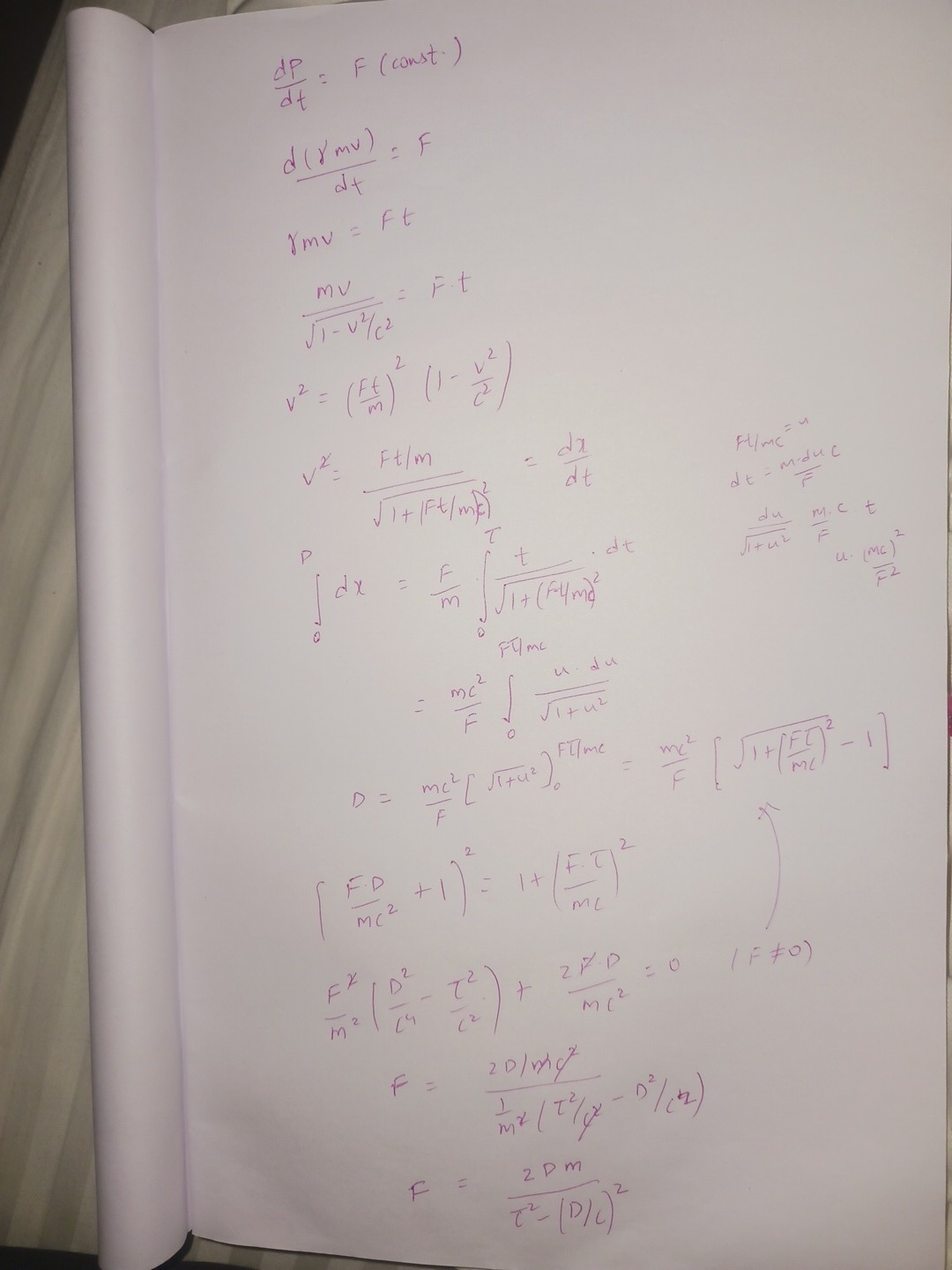
In the case of the character Star and Stripe from the manga My Hero Academia, it has been calculated here that she was able to dodge out of the way of an attack by jumping at 186668889.063 m/s,or 62% the speed of light, which with her official weight nets her a force of 3.6153647e+18 Newtons (Class P)
My understanding is that a character's jumping force has been considered acceptable for their lifting strength for a while though I don't think it's explicitly listed as a viable method on the page.
The second point, is in the case of a character interacting with a small amount of mass at Relativistic speeds.
Sasuke Uchiha from the manga Naruto, has been calculated here swinging his sword here to block a lightspeed attack from Mifune, with Sasuke's swing being at a speed of roughly 86% the speed of light which grants him 1.2586845e+17 Newtons (Class P).
This is being proposed as a lifting strength for Sasuke for him being able to swing a certain mass with incredible acceleration in order to block Mifune's strike. Naturally at calculated Relativistic+ speeds, any mass moving in such a quick timeframe is going to require an incredible amount of force. But does translate to Sasuke being able to lift significantly larger masses just as easily as he can swing this very light sword?
Personally, both of these examples being "Lifting Strength" under the current definition is odd to me. The reason being is that both Sasuke drawing his sword to clash with another character and Star and Stripe leaping are both quick, instantaneous actions involved very small amounts of mass. It comes across as potentially misleading to see someone has a Lifting Strength rating on par with the weight of small Moons or asteroids, when their only actual feat is jumping quickly or swinging a 3 pound sword quickly.
To me, in order for Lifting Strength to be fully separated from Striking Strength, it has to be a sustained action.
A character lifting a weight above their head, or pushing an object physically shouldn't be something done momentarily otherwise I'm pretty sure we could rate all characters with Rel+ combat speed to have Class P Lifting Strength by default just for swinging their fists.
This is best exemplified in the two examples that I've given. Star and Stripe's jump is the highest "Lifting Strength" feat in the verse, and Sasuke's sword swing will be the highest Lifting Strength feat in the verse outside of the gravity-based Chibaku Tensei feats. The actual "lifting" that they or other similar characters do isn't shown to be this high.
If however these are totally fine to be rated as the sole feats for a character's Lifting Strength values, then I think our page needs updating to mention these methods alongside the other current methods.
Lifting Strength is defined as the mass that an individual can lift on Earth. In other words, it measures the amount of upward force a character can produce. As such, pushing and pulling feats are also considered part of this statistic as long as they have proper calculations to account for the difference from lifting. The weight of something pulled across a horizontal surface often needs to account for the appropriate friction coefficient after finding the mass of the object. Telekinesis or other similar abilities must be separated from physical strength when used in a lifting feat. Tearing also falls within this category, but it is unreliable for calculating overall lifting ability most of the time, as the force used in a tearing motion is much lower than a lift, as a tearing motion uses much fewer muscle groups and is an awkward application of force compared to other movements. Likewise, throwing an object a certain height upwards can be used as a lifting feat, as doing so would require greater strength than merely lifting the object.
While Striking Strength measures the energy of a character's physical attacks, Lifting Strength measures the amount of mass they can lift, which derives from the amount of force a character can produce. As such, they measure two different physical quantities. Furthermore, fiction commonly features characters capable of striking with vastly greater energy than needed to lift weights they struggle with. As such, to accommodate for fictional portrayals, our indexes don't assume that a character that can physically produce the amount of energy used in lifting an object by a certain height can also lift it if said character didn't explicitly display such lifting feats. Thus, Lifting Strength and Striking Strength are generally not comparable and should be evaluated separately.
Essentially it defines the "Lifting Strength" feats that can be rated as:
- Lifting an object / mass with upwards force.
- Pushing or pulling an object, with the friction of an object being accounted for when pushed/pulled across a surface.
- Tearing an object (though this is considered less reliable than straight up lifting an object)
- Throwing an object, which requires greater strength than merely lifting an object.
However there's two points of clarification that I want to raise for expanding the page if they're deemed acceptable. Where methods for Lifting Strength are used which aren't explicitly spelled out in the page.
The first is the case of a character jumping at a certain speed to get their Lifting Strength:
In the case of the character Star and Stripe from the manga My Hero Academia, it has been calculated here that she was able to dodge out of the way of an attack by jumping at 186668889.063 m/s,or 62% the speed of light, which with her official weight nets her a force of 3.6153647e+18 Newtons (Class P)
My understanding is that a character's jumping force has been considered acceptable for their lifting strength for a while though I don't think it's explicitly listed as a viable method on the page.
The second point, is in the case of a character interacting with a small amount of mass at Relativistic speeds.
Sasuke Uchiha from the manga Naruto, has been calculated here swinging his sword here to block a lightspeed attack from Mifune, with Sasuke's swing being at a speed of roughly 86% the speed of light which grants him 1.2586845e+17 Newtons (Class P).
This is being proposed as a lifting strength for Sasuke for him being able to swing a certain mass with incredible acceleration in order to block Mifune's strike. Naturally at calculated Relativistic+ speeds, any mass moving in such a quick timeframe is going to require an incredible amount of force. But does translate to Sasuke being able to lift significantly larger masses just as easily as he can swing this very light sword?
Personally, both of these examples being "Lifting Strength" under the current definition is odd to me. The reason being is that both Sasuke drawing his sword to clash with another character and Star and Stripe leaping are both quick, instantaneous actions involved very small amounts of mass. It comes across as potentially misleading to see someone has a Lifting Strength rating on par with the weight of small Moons or asteroids, when their only actual feat is jumping quickly or swinging a 3 pound sword quickly.
To me, in order for Lifting Strength to be fully separated from Striking Strength, it has to be a sustained action.
A character lifting a weight above their head, or pushing an object physically shouldn't be something done momentarily otherwise I'm pretty sure we could rate all characters with Rel+ combat speed to have Class P Lifting Strength by default just for swinging their fists.
Furthermore, fiction commonly features characters capable of striking with vastly greater energy than needed to lift weights they struggle with.
This is best exemplified in the two examples that I've given. Star and Stripe's jump is the highest "Lifting Strength" feat in the verse, and Sasuke's sword swing will be the highest Lifting Strength feat in the verse outside of the gravity-based Chibaku Tensei feats. The actual "lifting" that they or other similar characters do isn't shown to be this high.
If however these are totally fine to be rated as the sole feats for a character's Lifting Strength values, then I think our page needs updating to mention these methods alongside the other current methods.


 )
)