Philosophy Lesson
Before we get to the main portion of this content revision, a little bit of background regarding Digimon's cosmology should be given first.
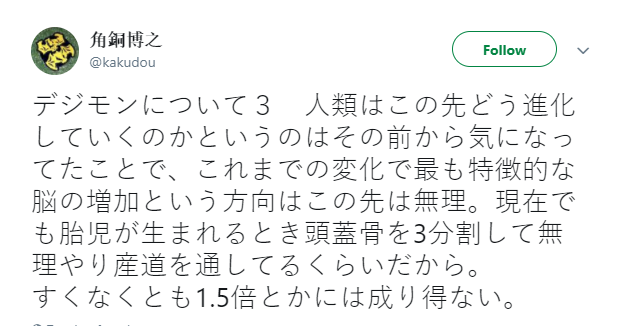
Translation: About Digimon 14: This got a bit too long, but now it’s the anniversary of the broadcast of the first episode.
As for why things from the Digital World can materialize in the real world, the concept of the soul in this series is similar to Neoplatonic emanationism, but that’s a story for another day.
Translation: With regard to Digimon Adventure, Nico revealed the first five minutes in a livestream, many people saw this, but at the premiere, I thought, oh !? in the mention of Demiurge and Idea. I had no contact with the production team of this work, but in the original series I used Neoplatonism, Gnosticism, and Emanationism.
Now, what do Neoplatonism, Gnosticism, and Emanationism mean?

www.nationalgallery.org.uk
Emanationism, philosophical and theological theory that sees all of creation as an unwilled, necessary, and spontaneous outflow of contingent beings of descending perfection—from an infinite, undiminished, unchanged primary substance. Typically, light is used as an analogy: it communicates itself

www.britannica.com
Neoplatonism explores the nature of reality, the soul’s relationship to the divine, and the path to spiritual enlightenment. It extends Plato’s teachings by presenting The One as the origin of all reality.

www.a-higher-view.com
This article will explore Christian Gnosticism, its history and place in modern society, as well as its key tenets.

www.thecollector.com
Neoplatonism posits that the world started with The One, which then emanated the Nous (Divine Intellect), which then emanated the Soul after contemplating The One.
Gnosticism posits that the (imperfect) material world was created by the Demiurge, trapping pieces of the Monad in imperfect forms.
Emanationism posits that everything comes from an ultimate source, namely, The One which is "completely ineffable and beyond all categories of thought, representing unity and perfection". The One is beyond human comprehension and can only become accessible "through spiritual ascent and direct experience".
The above are just summaries as best as I can word them but you should all get the general point of them.
How The Concepts Apply to Digimon
Now with the philosophy lesson out of the way, let's talk Digimon.
As I posted above, Hiroyuki Kakudou, the director of Digimon Adventure and Digimon Adventure 02, stated that he used Neo-Platonism and Emanationism for the concept of the soul, 1:1. With the release of Digimon Adventure Tri.'s first movie, he later added that apart from Neoplatonism and Emanationism, he also used Gnosticism. Now, how does the "soul" connect to the overall cosmology?
Part of the answer is in the very first scene of Digimon Adventure Tri.'s first movie. The concepts of Idea, the soulless Demiurge, and how the Demiurge has no idea of the existence that created it, nor about the existence of Idea or the soul, are talked about in an admittedly cryptic scene. This indicates that the soul is not the only thing that took inspiration from Neoplatonism, Gnosticism, and Emanationism but also the overall cosmology.
Another part of the answer is the concept of the World Soul from Neoplatonism, and how it is the second emanation in Neoplatonism, following Nous (Divine Intellect). The World Soul is not only the soul of the cosmos but also the source of all individual souls; without the World Soul and its interaction with the physical world (Human World in the case of Digimon), everything would remain inert. Not to mention, the individual souls emanating from the World Soul are both "connected to the physical world and the higher intellectual realms" as the World Soul contemplates the Nous. In effect, the Digital World is both a higher world (remember, Emanationism is understood ontologically) than the Human World (which is already an infinite multiverse) while at the same time a connection between the physical world and the Nous.
Apart from the “soul”, however, comes the concepts talked about in the “Digimon Demiurge” video, especially when it comes to the Neoplatonic concept of Ideas.
The biggest pieces of evidence comes from the Digimon Adventure novelization. All the quotes below come from Chapter 9 of the third novel, titled “The Last Enemy”:
At the beginning of the world, when the Digital World was still in chaos, the Digital World chose the Idea of “evolution.”
They were in a corner of empty sky far away from Spiral Mountain. Where emptiness surrounded them was a round circle, with bright crimson flames gushing out along its edges. Like a lid, the flames covered the hole that linked the Digital World to another world on the outside.
“But according to what you said… It seems that at least one of the beasties has escaped through this hole.”
“I wouldn’t call it a beastie. At the very least, according to the old scriptures, it’s known as an Idea without a material body.”
“Well, that’s what the myth says, but… Either way, it is an evil being?”
“For this world it is. The Digital World as we know it wouldn’t have existed in the first place if it hadn’t rejected that Idea.”
“It’s not a virus. It’s neither data nor a program either. But if you asked me what it was, I wouldn’t know what to tell you. It seems to have formed after Nanomon made the black hole. It could have been the cause of the black hole, or perhaps it is a barrier… The venerable Gennai has called it the digital form of an Idea.”
“What does that mean?” Sora, who was ignorant about computers, asked, but Koushiro also shook his head in puzzlement. Andromon continued his explanation.
“This is outside my field of expertise, but there is an old legend. It says that when the Digital World was first created, two Ideas fought over what sort of world should be made. One of those Ideas won and the rules of the Digital World were established. The other Idea was cast out into the ‘Wall of Fire’…”
“Anyway, about what you just said… What did you mean?” Mimi asked.
“I mean that Apocalymon’s real body is elsewhere.”
“What in the world is Apocalymon?” Koushiro asked.
“Apocalymon is merely an Idea. An idea that rejects “evolution.” In other words, it is the very essence of the idea to “not evolve.” While it is true that there are those in the Digital World who have disappeared through the evolution process, they get reconstructed as different species at the Village of Beginnings. However, what remains is their feelings of regret. This guy absorbed those lingering emotions as its nourishment in order to form its physical body.”
“Is that so…”
“You must hurry. Apocalymon is storing energy to create a big bang in the Digital World. The big bang will affect both the Digital World and the human world overlapping it. You must seal away Apocalymon this instant."
But Apocalymon, whose existence was originally an Idea, only needed a physical body to reset the Digital World. It was not affected by the loss of its physical form in the least. It had steadily been preparing for the big bang within its body all along.
After the big bang, Apocalymon planned to rule the new world that was created out of it by becoming its god. It wanted to become the god of a dead world— a world that fully denied evolution, growth, movement— all sorts of transient processes in exchange for silence and stagnation.
Now what do all of these mean? For starters, the first quote confirms that in the beginning, the Digital World’s initial state was “chaos”, which is arguably a part of Gnosticism. Again, though, the most important part is the talk of Ideas as befits the Neoplatonic cosmology.
Translation: #DigimonAdventure The essence of Evolution is Light, something like Light, Truth or Love along the lines of Platonism
Light and darkness are two sides of the same coin. It is when light and darkness are at equilibrium, that the world is stable and balanced. Homeostasis functioned to keep that balance equal, so whenever the powers of darkness increased dramatically, it needed to stop them in order to keep the balance of the Digital world from collapsing.
It was a young human girl named Hikari Yagami who had caused the evolution. They didn’t know what it was about Hikari that accelerated “evolution.” Homeostasis sent Parrotmon to Hikarigaoka to retrieve Greymon. At that time, they scanned the data of that curious young girl and, for comparison purposes, also scanned the data of her brother Taichi beside her along with the data of all humans who had witnessed the battle between Greymon and Parrotmon. Homeostasis used a group of its Agents to analyze the data set they had obtained. The result was their discovery that in each child existed unique spiritual traits such as courage, friendship, love, knowledge, purity, sincerity, and kindness, etc. These qualities were not about whether they already possessed them or not, but that they had the hidden potential for it. Hikari’s trait, however, was different from them all. It was like the presence of the power of “life” itself. It had the same meaning as “evolution” for the Digital World, or maybe even the same meaning as “truth” and “beauty.” As an umbrella term for the source of life, they called this trait “light.”
Furthermore, Hikari’s Crest of Light is revealed by Kakudou to be a Platonic concept; in the Digital World, Light/Evolution is the Idea of the Good. Or alternatively, the Idea of “God” which would later go on to become Yggdrasil in the series.
It isn’t rare for me to be in a hard time trying to understand something about Digimon, there’s so much stuff out there and at the same time there’s also too little, and in the en…

digitalworldarchive.wordpress.com
Following this, Kakudou tells about not having explained the occult influences in “Adventure”, especially about how the Digimon entered the Human World (Previously he stated that the concept of “ReArise” was already a thing in the making of Adventure, but it was just never used in the series and they basically forgot the concept there). He explains that what he has in mind is something like Plato’s “Allegory of the Cave”, although he doesn’t explain it in detail and asks them to research later (Funny enough, Habu did research about it, alongside Konaka’s mentions of the Fogglets, and he seemed very impressed with the concepts). Kouji Watanabe gives a simple explanation about things that seem to be close, but are just shadows. Kakudou complements by saying that was how he understood Digimon, as we are not directly seeing their essence, but only something like a shadow. Konaka then talks about how Digimon has Dagomon and various others based on multiple religions, so the sense of occult from this can be easy to understand.
Introduction[confidential report]Chapter I Research and Birth of Digital MonstersI-1 OriginI-2 BirthI-3 ResearchI-4 EvolutionI-5 Digimon CaptureI-6 Digimon LoaderI-7 Crack TeamChapter II Structure …
digitalworldarchive.wordpress.com
fig.14: Image of the relationship between the Digital World and the many Real Worlds
Due to advances in research into the Digital World, the existence of other real worlds, the so-called “parallel worlds”, is speculated. They are scattered around the Digital World and are thought to interfere with it at different times with different points of view. Therefore, it seems highly likely that they perceive the Digital World differently depending on the world.


Now, Digimon has a lot of interpretations owing to the fact that multiple writers and creators have worked on it. How do we reconcile all of these differences? Well, there’s the quote above from the Ask the Staff livestream, where Kakudou basically said that the nature of the Digital World is like Plato’s “Allegory of the Cave” where humans really only see a “shadow” of the Digital World, being unable to comprehend its true nature. This is backed up by both the 25th Anniversary book as well as the Xros Wars manga (screenshots above). Therefore, the numerous interpretations of the Digital World in different media are due to humans from a particular universe seeing the Digital World differently. This also connects to Digimon Adventure Tri.’s opening scene where the Demiurge’s world is “merely a shadow of the true world”.
With each different interpretation of the Digital World also changes its “history”; for example, in Digimon Adventure and in Cyber Sleuth, Digimon and the Digital World are explicitly not created by humans but have existed ever since while in Digimon Tamers, the Digital World was created by humans as that was how it was perceived by them.
The Digital World–as seen in the series by both the audience and the characters in the story–is just a transient “shadow” or “skin” made manifest due to interacting with humanity’s computer network, so that’s how Digimon and the Digital World are seen by the physical world.
Now why are the pieces of information above important? Because it further proves that the Digital World (and indeed, the worlds above even it) are ontologically superior to the physical (Human) world(s). How is this so? Well, Plato’s “Allegory of the Cave” has the inside of the cave and the shadows on the wall being the prisoners’ reality (physical world) when, in fact, the “true world” is outside the cave (Digital World and above).
God’s Domain
Above even the Digital World lies Infinity Mountain, and at the top of Infinity Mountain is the Kernel, the domain of Yggdrasil, the God or Host Computer of the Digital World. Along with Yggdrasil, the Kernel is also the home of the Three Great Angels (Seraphimon, Ofanimon, and Cherubimon) as well as the Royal Knights, Yggdrasil’s enforcers.
There are other names for the Kernel such as the "System World", "Heaven", and "Realm of God".
Why is the Kernel important? Well, recall that in Neoplatonism, the soul is divine in nature and descends to the physical world in order to animate a body. At the same time, though, the soul’s ultimate purpose is to “return to the higher levels of existence” by moving from the physical world to the “unity of The One”. As such, it is no coincidence that the Kernel is where all the data from the Digital World is computed; data is also what comprises the souls of Digimon.
However, with Cyber Sleuth’s revelations, Yggdrasil cannot be “The One” because of the existence of the Eaters and worlds above even the Kernel; the true Source of everything is heavily implied by Suedou to exist beyond even the Digital World, though. The Eaters exist ontologically above even the Kernel thanks to Emanationism as well as them existing beyond time and space, with the Eaters going throughout the higher worlds recording data then returning to the Source. Although with Yggdrasil’s constant calculations, she can be likened to the Divine Intellect (Nous) as she is contemplating The Source that Suedou hypothesized exists.
According to the sources above, Nous contains the eternal Forms, which are “perfect, immutable, and timeless, representing the true essence of things”. In addition to the eternal Forms, Nous is also the source of all intellect and reason. Yggdrasil creating Norn as the “Form of Feelings”, and her constant calculations to access the worlds beyond the Digital World (which can be seen as Yggdrasil contemplating The One/Source), as well as her experiments with Digimon and the Digital World makes Yggdrasil being the Divine Intellect fit her like a glove; she might not be The One but she is still the source of order in the Digital World, as well as being the blueprint for creation due to her status as Light or Evolution, the very Idea that the Digital World chose when it was still chaos.
Potential Disqualifiers and Counter(s) to Them:
Human beliefs shaping/changing the history of the Digital World. Let us consult the Tiering System FAQ regarding 1-A disqualifiers for this:
Another example could be cosmologies where a higher level originates from the thoughts/beliefs/etc of inhabitants of a lower level; while these thoughts literally originating within the lower reality and then somehow "floating away" to form a higher one would be a disqualifier, no anti-feat is present if the verse has it so these operations simply already exist in a higher reality.
The reason why human beliefs can shape or change the Digital World is due to them simply viewing that world as a transient “shadow” or “skin” applied over the “true world”. Thus, it’s not a disqualifier at all because the lower reality had no hand in forming the higher one at all; the higher reality already existed prior to the lower one.
Yggdrasil being “defeated” by others. Most notably in X-Evolution, where the True Yggdrasil is damaged by Alphamon’s Ouryuuken and affected by Omegamon X’s All-Delete. How can this be when Yggdrasil is the God of the Digital World? Well, despite Yggdrasil being the God of the Digital World and thus the system itself, she was defeated by a power source: the X-Antibody. Let us consult the Tiering System FAQ again:
On the matter of power sources: That would depend on the nature of the power source itself. For example, a common trope in fiction is power sources that, so to speak, are "for the taking," meaning they are naturally self-diffusive and don't offer any resistance whatsoever to being tapped into, as being utilized in such a way is in their nature. Drawing power from such sources is obviously not actually an anti-feat for them being 1-A, especially so if they are depicted as naturally connected to, and united with, the beings that tap into them.
However, if the "power source" in question consists in a lower character literally overwhelming a would-be 1-A object with their own abilities and forcibly absorbing it into themselves, then that constitutes an anti-feat, unless the occasion falls under the stipulations above.
Normally, the X-Antibody is attained by strong Digimon changing their Digicores in order to take Program X (a virus program designed by Yggdrasil to exterminate Digimon in order to reduce data in the Digital World) and then produce the antibodies for the virus, but this is temporary. However, there are certain Digimon that naturally have the X-Antibody on them to begin with and permanently to boot, with Alphamon being among those Digimon. Alphamon then freely gives Omegamon the X-Antibody as well, allowing the latter to evolve into Omegamon X. Therefore, this counts as a power source “free for the taking” or rather “freely given” in this case.
There have been characters that have taken the power of the Kernel for themselves, among them being Spiral Origin from Digimon ReArise and Barbamon from Digimon NEXT.
In Spiral Origin’s case, it failed to fully take over the Kernel but it did take over a considerable portion of Yggdrasil’s domain. However, Spiral Origin was unable to reach Yggdrasil herself and as a result, Spiral Origin's control was incomplete tl the point that the Four Holy Beasts managed to stop Spiral Origin from destroying the Digital World; had Spiral Origin fully taken over the Kernel, then no one would have been able to do anything at all.
In Barbamon’s case, he manages to become Yggdrasil. However, Yggdrasil willingly fused with Barbamon and thus this becomes another case of a power source being "free for the taking"
In both cases, neither Spiral Origin nor Barbamon actually overpower Yggdrasil at all when taking over the Kernel.
Yggdrasil splitting its consciousness, creating Norn in the Digimon NEXT manga. This can be seen as a disqualifier due to the following as taken from the Tiering System FAQ:
The first practical effect of this fact is that the power of a 1-A character cannot be dispersed so much that it reaches into a lower tier. Since there is no conceivable extension of any lower tier that can yield equality to a 1-A structure, neither can there be any subdivision (Even an infinite subdivision) of 1-A that reduces down into such tiers. Unless, of course, this division is somehow non-quantitative in nature (i.e. The results of the division are not actually numerical "chunks" of the character's power); however, this should be made reasonably clear by statements or through background context.


The counter to this is Norn’s own words: she’s the “Form of Feelings” born from Yggdrasil, sent to watch over the bonds between Humans and Digimon. Nothing is said nor implied about Yggdrasil’s power being numerically divided into a lower tier, and the fact that Norn is the “Form of Feelings” seems to indicate that she is, instead, a Neoplatonic concept. As a result, this “division” of the 1-A character is non-quantitative.
Which Characters Would Scale to 1-A/1-A+?
Not counting the Source which is currently still only Suedou's hypothesis at the end of Cyber Sleuth, the Mother Eater would obviously scale. True Yggdrasil would scale as well as Jesmon GX and Ogudomon X.
Those that controlled the Kernel would also scale such as Barbamon after fusing with Yggdrasil. The Arbitrators (VictoryGreymon and Z'dGarurumon) would also scale for being created specifically to counter Yggdrasil should she become corrupted. By extension, NEO would scale as well for being stronger than Barbamon after the latter fused with Yggdrasil.