• This forum is strictly intended to be used by members of the VS Battles wiki. Please only register if you have an autoconfirmed account there, as otherwise your registration will be rejected. If you have already registered once, do not do so again, and contact Antvasima if you encounter any problems.

    For instructions regarding the exact procedure to sign up to this forum, please click here.
  • We need Patreon donations for this forum to have all of its running costs financially secured.

    Community members who help us out will receive badges that give them several different benefits, including the removal of all advertisements in this forum, but donations from non-members are also extremely appreciated.

    Please click here for further information, or here to directly visit our Patreon donations page.
  • Please click here for information about a large petition to help children in need.

Calculating Pillar and Pipe explosions

Messages
20,403
Reaction score
16,221
Two cases

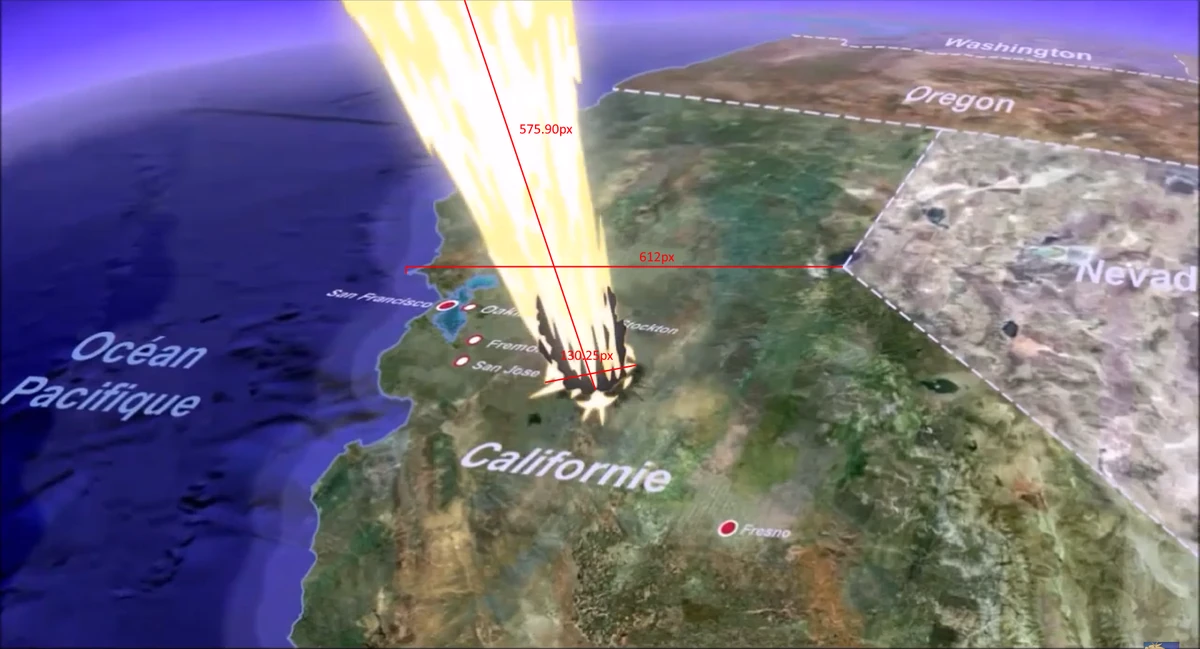
Case 1: An explosion errupts but it moves like a pillar. It doesn't create a round fireball but rather a cylinder and it destroys everything above it, exerts force. How would one calc it?

Case 2: An explosion errupts inside a pipe-like structure and it fills it up and rises to the top and out of the structure, gushing out of it. How would one calc it?

Here's visual aid for both.

3832e58dc50d.png
 
Two cases

Case 1: An explosion errupts but it moves like a pillar. It doesn't create a round fireball but rather a cylinder and it destroys everything above it, exerts force. How would one calc it?
Assuming the white things in the picture are the splitting of clouds then you could probably use the KE from the clouds to find the energy of the explosion
Case 2: An explosion errupts inside a pipe-like structure and it fills it up and rises to the top and out of the structure, gushing out of it. How would one calc it?
Assuming no destruction, then just find the height of the explosion, divide that by 2 and use that for the radius

Aterwards use the cause of the explosion to determine the PSI, generally at least 4 can be used since even the weakest explosives IRL can damage metal. When ur done with both then just plug it into the explosion formula to get ur value

this is how I'd go about calcing something like that anyway
 
Assuming the white things in the picture are the splitting of clouds
Most likely the cap of the pipe in question.
I've seen people find the volume of the cylinder and then convert that to what would be the equivalent radius of a sphere (∛(3/4 * V/π) I believe the formula for that is) and then use that. I'm not sure about it, though.
 
I'll wait for more opinions and no, the white stuff was just for effect to show that the explosion has impact.
 
I can't say I've seen the volume idea before. I wouldn't outright reject it but I'm not sure it makes much sense either. You can just calc its destruction feats, when applicable, but I'm not sure the explosion formulas can do much here. I suppose worst case you could calc the radius of the explosion as it is, it wouldn't give as much but it is what it is

Regarding the second case it's similar, except the explosion is being forced into going one direction rather than naturally doing so. This doesn't change much though, I think.
 
I can't say I've seen the volume idea before. I wouldn't outright reject it but I'm not sure it makes much sense either. You can just calc its destruction feats, when applicable, but I'm not sure the explosion formulas can do much here. I suppose worst case you could calc the radius of the explosion as it is, it wouldn't give as much but it is what it is

Regarding the second case it's similar, except the explosion is being forced into going one direction rather than naturally doing so. This doesn't change much though, I think.
So we don't actually have any precedent for that ey? Kinda sad considering how common this type of feat is.
 
Assuming the white things in the picture are the splitting of clouds then you could probably use the KE from the clouds to find the energy of the explosion

Assuming no destruction, then just find the height of the explosion, divide that by 2 and use that for the radius

Aterwards use the cause of the explosion to determine the PSI, generally at least 4 can be used since even the weakest explosives IRL can damage metal. When ur done with both then just plug it into the explosion formula to get ur value

this is how I'd go about calcing something like that anyway
No you are wrong.
 
Back
Top