This forum is strictly intended to be used by members of the VS Battles wiki. Please only register if you have an autoconfirmed account there, as otherwise your registration will be rejected. If you have already registered once, do not do so again, and contact Antvasima if you encounter any problems.
For instructions regarding the exact procedure to sign up to this forum, please click here.
We need Patreon donations for this forum to have all of its running costs financially secured.
Community members who help us out will receive badges that give them several different benefits, including the removal of all advertisements in this forum, but donations from non-members are also extremely appreciated.
Please click here for further information, or here to directly visit our Patreon donations page.
Please click here for information about a large petition to help children in need.
Starts with something with a measurable size, if you have the size of that monster it could be good
Does that mountain only appear in those scenes? Perspective isn't perfect for either of the images where the mountain is with the characters, but I guess the one with the monster will be good
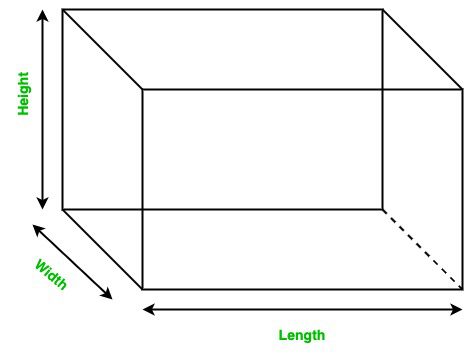
Just use the size of the monster as a rule to establish the pixel value in that scene and use that to measure the size of that mountain. It looks like a rectangle for me, the volume for those is the product of length, width and height.
Look for average mountain density and multiply it with the volume to find the mass
After once again use pixel measurements to find the distance from the ground and apply gravitational potential energy you can find in the calculations page.
With that you'll find the total energy amount when the mountain was released
The problem would be perspective
Just the mountain and the monster is already not a "100% in the same plane" perspective, but I think that since both are of huge size, it might balance out more
So scaling to Willow's height might downplay a lot the size of the mountain since it's much further in the background
If you want to make a super downplayed version of the calc, I think it's possible, but I don't think many would accept.
If I measure the height of an area of the creature using the willow on this panel, can I use this measurement on the panel where the mountain is?
I mean, in this panel, let's say the creature's head is 12px which corresponds to 15cm. Then can I use this 12px = 15cm thing for the creature's head on the panel with the mountain?
Just use the size of the monster as a rule to establish the pixel value in that scene and use that to measure the size of that mountain. It looks like a rectangle for me, the volume for those is the product of length, width and height.
Sorry to bother you again, but I'm a little confused, I did the pixel scaling using the creature's head, but now I don't understand what to do. Can you explain this part in more detail?
You'll use the length of the mountain, and use that in the other scene above to find the height
The way I see it the mountain has a shape similar to a cuboid, so you'll multiply the area of the length^2 (As I think that the width and length are similar) by the height



Does that mountain only appear in those scenes? Perspective isn't perfect for either of the images where the mountain is with the characters, but I guess the one with the monster will be good
Just use the size of the monster as a rule to establish the pixel value in that scene and use that to measure the size of that mountain. It looks like a rectangle for me, the volume for those is the product of length, width and height.
Look for average mountain density and multiply it with the volume to find the mass
After once again use pixel measurements to find the distance from the ground and apply gravitational potential energy you can find in the calculations page.
With that you'll find the total energy amount when the mountain was released