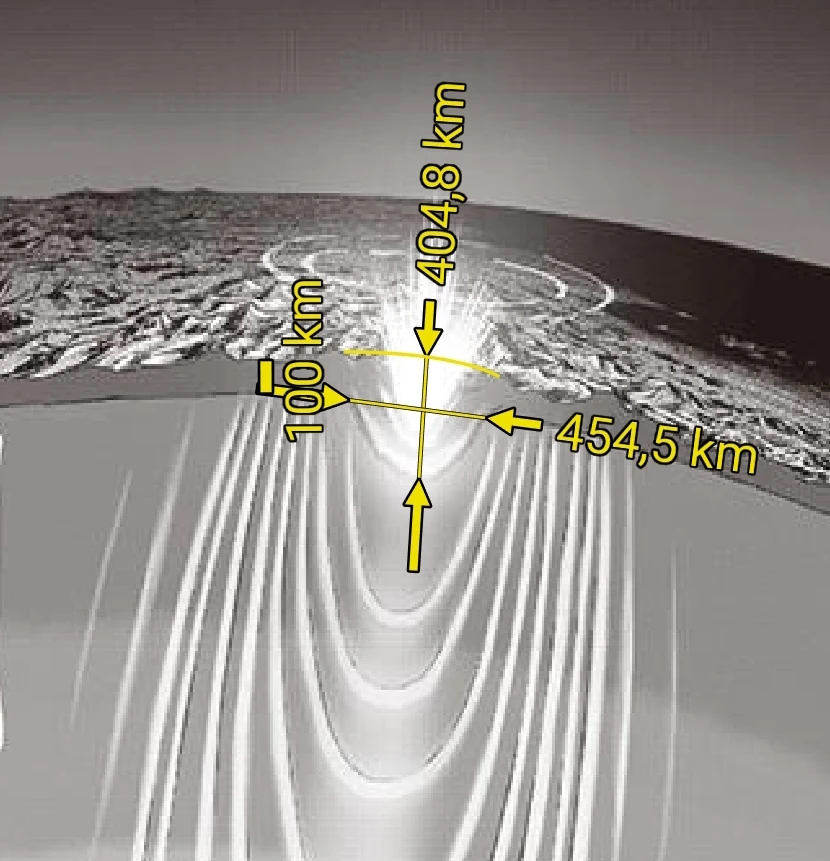
But what happens when the entry and exit points converge?
Think about it like this.
Imagine, if you will, that space and time is a flat piece of paper (It's more like a 3d gel with 8 extra micro-dimensions).
A protal works by warping that paper so that two specific points on that paper, previously seperated by more paper are touching.
So take a piece of paper, and place your hand on two different sides of the paper, and push them together until they touch. There should be an upward crease in the paper, a hill for say. Now, take a small little risk figure or something, and place them inbetween these two touching points on the paper.
Then, when that's done, spread the paper back out.
The figure is now beneath the paper, outside of space and time. They are effectively removed from reality, in a separate existence.
Let me explain some things because this example has some issues. While in the demonstration, you are placing a 3d object on a 2d plane, it may be better to pretend that there is a thing inside of the paper, inbetween the two touching points, and perhaps this isn't the best eplanation, or even right. This is just my answer to a thought experiment.